DERMORE Clinic Gangnam, Seoul · Value Beyond Skin · International Patient Support


Functional Medicine & IV Therapy · Needs Clinic Confirmation
Functional Medicine Testing
Functional medicine testing is a group of laboratory tests and health assessments used to evaluate specific aspects of a person's health — nutritional status, digestive function, metabolic markers and other health-related indicators.
Schedule a ConsultationFunctional Medicine Testing in Seoul, Korea

Medically reviewed by Dr. Seung-Gon Jeong, board-certified internal medicine specialist DERMORE Clinic, Gangnam-gu, Seoul
Functional medicine testing is a group of laboratory tests and health assessments used to evaluate specific aspects of a person's health — nutritional status, digestive function, metabolic markers and other health-related indicators. At DERMORE Clinic in Gangnam, Seoul, it belongs to Functional Medicine & IV Therapy, and the principle governing it is that testing should answer a question rather than survey a person.
What Is Functional Medicine Testing?
Testing is selected from symptoms and history, and interpreted in the same context.
Depending on symptoms and medical history, testing may involve blood, urine, stool or saliva samples.
Results are interpreted alongside clinical findings rather than read in isolation.
The purpose is to help identify potential health concerns and guide further evaluation or personalized care.
It may help identify certain nutritional deficiencies, metabolic abnormalities, digestive health concerns and other measurable issues.
Testing should be guided by clinical needs rather than broad screening without a clear indication.
That last point deserves to stay in view throughout this page. A test ordered because a symptom raises a question is useful. A panel ordered because panels are available produces numbers whose meaning nobody can interpret, and some of those numbers will be abnormal by chance.
Patients usually come wanting to investigate persistent symptoms, suspected nutritional deficiencies, digestive concerns or metabolic health, or because they want a more individualized understanding of their health.
Why Physician Interpretation Is the Point
Laboratory testing has become something a consumer can buy directly, and regulators have been clear about what that changes.
The U.S. Food and Drug Administration describes direct-to-consumer tests — those marketed to consumers without the involvement of a health care provider — as having varying levels of evidence behind their claims: some have substantial scientific and clinical data supporting the information they provide, while others do not. It notes that different companies do not test for the same things and may therefore give different results for the same condition, that a negative result does not mean a person is not at risk, and that consumers should consider discussing their results with a qualified health care provider to understand the clinical relevance to their own health.
The testing described on this page is the opposite arrangement: tests selected by a physician from your symptoms and history, and results reviewed with you afterwards. That is the whole value of it. A number without an interpretation is not information, and the ability to say "this result does not mean what you think it means" is the part of the service that cannot be bought in a box.
Who Performs Functional Medicine Testing at DERMORE Clinic
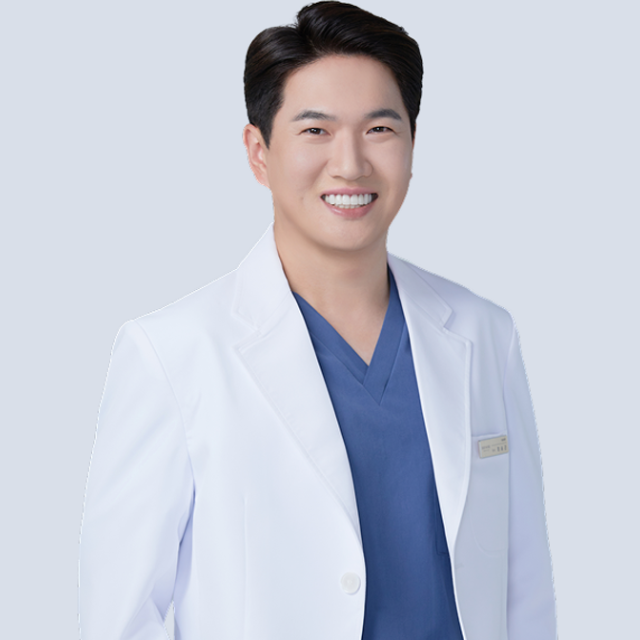
Dr. Seung-Gon Jeong
Board-Certified Internal Medicine Specialist
Dr. Seung-Gon Jeong is the physician responsible for functional medicine at DERMORE Clinic and the named reviewer for this page. This page does not claim that one specific doctor personally performs every session of this service; the treating physician is confirmed when the treatment is scheduled.
Dr. Seung-Gon Jeong is a Representative Director of DERMORE Clinic and a board-certified internal medicine specialist. His stated areas of practice are anti-aging treatments, lifting, volume enhancement, functional medicine, obesity management, body contouring and IV nutrient therapy. He was previously a director at Rienjang Clinic. He is a certified obesity specialist through the Korean Society for the Study of Obesity and a certified nutritional supplement prescription specialist through the Korean Society of Nutritional Supplement Prescription, and he is a member of the Korean Society of Functional Medicine, the Korean Society of Aesthetic Plastic and Laser Medicine, the Korean Filler Society and the Korean Society of Internal Medicine.
Two credentials are directly relevant here: the internal medicine specialty, which is the training that interprets laboratory results against a whole patient, and the Korean Society of Functional Medicine membership.
Every treatment at DERMORE Clinic begins with a one-on-one consultation with a physician, supported by the Metaview facial skin analysis system, and the treatment plan is then built around the patient's skin condition, medical history, expectations and schedule rather than a fixed menu.
What the Testing Can Cover
The categories below describe what this kind of assessment looks at, and each is chosen because a symptom pointed at it.
Nutritional status is the most familiar: whether intake, absorption or loss has left a measurable shortfall, and if so of what. Digestive function covers how the gut is working and, where indicated, what is living in it, which is relevant when symptoms are gastrointestinal or when absorption itself is in question. Metabolic markers describe how the body is handling energy and its substrates, and they intersect with weight, with fatigue and with several conditions that are worth identifying early rather than late.
Other health-related indicators are added when a specific question calls for them. The sample required depends on what is being measured — blood, urine, stool or saliva — and the clinician selects both the test and the sample type from the clinical picture rather than from a package.
None of these categories is a diagnosis on its own. A number sits inside a context made of your symptoms, your history, your medications and your diet, and the same value can mean different things in two different people. That context is supplied at the consultation, which is why the review appointment is as much a part of this service as the sample collection.
Who Is a Good Candidate for Functional Medicine Testing?
Adults with persistent or unexplained symptoms.
Adults with suspected nutritional deficiencies.
Adults with digestive concerns.
Adults with specific health issues that may benefit from targeted laboratory investigation.
Testing may not be necessary for individuals without relevant symptoms or clinical indications, and it is not a substitute for urgent medical care in an emergency. Certain tests may need to be postponed during acute illness, or when temporary factors could affect accuracy — recent antibiotic use, pregnancy, breastfeeding, or significant changes to supplements.
Those timing factors are worth raising before the appointment rather than during it. A stool test taken days after a course of antibiotics, or a nutritional panel taken a week after starting a new supplement, may measure the recent past rather than your baseline.
Alternatives include conventional medical evaluation, routine blood tests and targeted diagnostic tests recommended by a qualified provider — approaches that investigate specific symptoms or suspected conditions using established diagnostic methods. For many questions, those are the right first step.
What to Expect: Procedure, Recovery, and Results Timeline
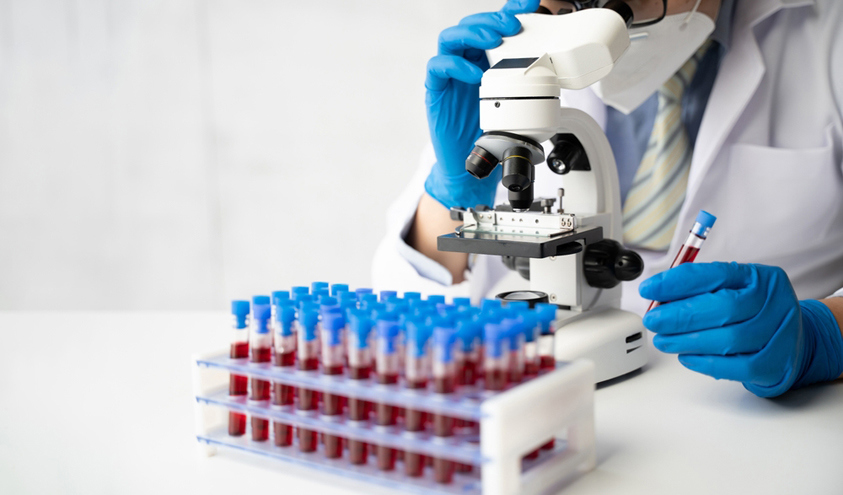
The process follows six steps.
Attend the consultation.
Discuss symptoms, medical history, diet, lifestyle and health goals.
Complete the recommended laboratory tests using the required samples.
Wait for the results to be processed.
Review the findings with the healthcare provider.
Discuss any recommended treatment, dietary changes, further investigation or follow-up.
The initial consultation and sample collection typically take 30 to 60 minutes, and a follow-up visit may be needed to review the results. Anesthesia is not required and the process is generally not painful: blood collection may cause brief discomfort or a mild pinch at the needle site, while urine, stool and saliva collection are typically painless.
There is generally no recovery period, and you can usually resume normal activities immediately. Temporary discomfort or bruising after a blood draw may occur.
The same day in Korea is generally sufficient for the initial consultation and routine sample collection, and most patients can fly home the same day.
Where testing leads to a treatment plan, the timeline for noticing a change depends entirely on what is being addressed — anywhere from around two weeks to six months after starting the plan, depending on the tissue and system involved. The test itself produces a result; the result produces a plan; the plan is what takes time.
Safety, Precision, and Clinic Standards

Functional medicine testing generally carries minimal physical risk. Blood collection may cause temporary pain, bruising, bleeding or dizziness at the needle site. Urine, stool and saliva collection are usually painless with few physical risks.
The risks that matter here are not physical. Inaccurate results, false-positive and false-negative findings, and unnecessary follow-up testing are the recognized downsides of laboratory investigation, and they are the reason testing is best aimed at a question. A false positive leads to further tests and worry; a false negative provides false reassurance. Neither is eliminated by ordering more tests, and both become more likely the more tests are ordered without an indication.
Common equipment includes blood collection supplies, sample collection kits for urine, stool or saliva, and laboratory analyzers used to measure selected health markers.
What DERMORE Clinic states about its own standards is this. Consultations and treatments are led by a board-certified dermatologist and a board-certified internal medicine specialist. Treatment planning is personalized through one-on-one consultation to assess individual needs and suitability. The clinic also provides dedicated pre-treatment and post-treatment care, including intensive care programs, and its stated philosophy is "Value Beyond Skin" — care that goes beyond external appearance to support inner confidence and overall health.
DERMORE Clinic occupies approximately 330 m², about 100 pyeong, on the third floor of the Yeonseung Building in Gangnam, and every skin-care treatment room in the clinic is a private room.
DERMORE Clinic is a Registered Medical Institution for Attracting Foreign Patients, registered with the Republic of Korea's Ministry of Health and Welfare under the Medical Overseas Expansion and Foreign Patients Attraction Act. That registration covers the treatment of international patients; it is not a facility accreditation.
Combining Functional Medicine Testing with Other Treatments
Testing may be combined with a medical consultation, nutritional assessment, lifestyle evaluation and follow-up testing when clinically indicated. What it should not become is a standing subscription: repeat testing is worth doing when something has changed or when a plan needs checking, not on a schedule.
Functional Medicine & IV Therapy, where the clinic's related services sit.
Medical Weight Loss, where metabolic findings feed into a weight-management plan.
Skin Boosters, where skin quality is being addressed in parallel.
The Bottom Line
Testing is selected from symptoms and history, and interpreted alongside clinical findings.
Broad screening without a clear indication is explicitly not the approach.
Consultation and sample collection take 30 to 60 minutes, with no recovery period.
The same day in Korea usually covers it, with a follow-up to review results.
False positives, false negatives and unnecessary follow-up are the real risks of over-testing.
Frequently Asked Questions

Am I a good candidate for functional medicine testing? Adults with persistent or unexplained symptoms, suspected nutritional deficiencies, digestive concerns, or specific health issues that may benefit from targeted laboratory investigation.
Who does not need this testing? Individuals without relevant symptoms or clinical indications. It is also not a substitute for urgent medical care in an emergency.
Should any test be postponed? Certain tests may need to wait during acute illness, or where temporary factors could affect accuracy — recent antibiotic use, pregnancy, breastfeeding or significant supplement changes.
What samples are involved? Depending on your symptoms and history, testing may involve blood, urine, stool or saliva samples.
Is it painful? Generally not. Blood collection may cause brief discomfort or a mild pinch at the needle site; urine, stool and saliva collection are typically painless.
How many days should I stay in Korea? The same day is generally sufficient for the initial consultation and routine sample collection, and most patients can fly home the same day.
How long until I see a change from any resulting plan? That depends entirely on what is being addressed — anywhere from about two weeks to six months after starting the plan, depending on the tissue and system involved.
What are the downsides of testing? Inaccurate results, false-positive or false-negative findings, and unnecessary follow-up tests. This is why testing is directed at a clinical question rather than ordered broadly.
Book a Consultation at DERMORE Clinic
If you are considering functional medicine testing in Gangnam, Seoul, the consultation decides which questions are worth asking of a laboratory — and which are better answered another way.
DERMORE Clinic is at 3F, Yeonseung Building, 228 Dosan-daero, Gangnam-gu, Seoul 06048, Republic of Korea. Consultation hours are Monday to Friday from 10:00 to 19:00 KST and Saturday from 10:00 to 16:30 KST, with a weekday lunch break from 13:00 to 14:00 KST. The Wednesday schedule varies by holiday week, and the clinic is closed on Sundays and public holidays.
To book a consultation, contact DERMORE Clinic through its contact page, by phone on +82-2-541-3888, or by email at info@dermoreseoul.com. Consultations for international patients are available in English.
Disclaimer
For general information only. This page does not replace professional medical advice, diagnosis or treatment. Whether any treatment described here is appropriate for you, what it can realistically achieve and what risks it carries are determined in an individual consultation with a qualified medical professional at DERMORE Clinic. Individual results vary with skin condition, medical history, the technology selected and the course of recovery.
Sources & Further Reading
- U.S. Food and Drug Administration — Direct-to-Consumer Tests: evidence levels, differing results and discussing findings with a qualified provider
Other Treatments
Explore additional dermatology and anti-aging treatments offered at DERMORE Clinic.

EMFACE Facial Muscle Lifting
EMFACE facial muscle lifting is a non-invasive treatment that combines synchronized radiofrequency energy with HIFES™ muscle stimulation, so that one session addresses both the skin and the facial muscles beneath it.
Learn More

ELSA Local Lipolysis
ELSA Local Lipolysis is a localized fat-reduction treatment intended to reduce stubborn fat deposits in selected body areas and improve body contours.
Learn More

Pre- & Post-Procedure Skin Care
Pre- and post-procedure skin care is personalized guidance and supportive skin care before and after cosmetic or dermatological treatments.
Learn More