DERMORE Clinic Gangnam, Seoul · Value Beyond Skin · International Patient Support


Medical Weight Loss · Needs Clinic Confirmation
GLP-1 Weight Loss Treatment
GLP-1 receptor agonists mimic the action of a natural gut hormone involved in appetite, fullness and blood-glucose regulation.
Schedule a ConsultationGLP-1 Weight Loss Treatment in Seoul, Korea

Medically reviewed by Dr. Seung-Gon Jeong, board-certified internal medicine specialist DERMORE Clinic, Gangnam-gu, Seoul
GLP-1 receptor agonists mimic the action of a natural gut hormone involved in appetite, fullness and blood-glucose regulation. At DERMORE Clinic in Gangnam, Seoul, GLP-1 weight loss treatment belongs to Medical Weight Loss, and it is prescribed as medical treatment with eligibility criteria and follow-up, not dispensed as a product.
What Is GLP-1 Weight Loss Treatment?
The mechanism is hormonal, and the treatment is a prescription medicine rather than a procedure.
Semaglutide is a GLP-1 receptor agonist; tirzepatide activates both GIP and GLP-1 receptors.
The effect is on appetite, fullness and blood-glucose regulation.
Treatment is generally combined with a reduced-calorie diet, increased physical activity and ongoing clinical supervision.
Injectable treatment uses the medication's approved delivery device, such as a prefilled pen.
No laser, ultrasound, operating room or specialized cosmetic equipment is involved.
The last two points are worth stating because this sits on a clinic website among device treatments and is nothing like them. What it requires instead is measurement, assessment, laboratory testing where indicated, dose adjustment and scheduled review — the apparatus of medical care rather than of aesthetics.
Patients generally seek it for medication-assisted weight loss, for help managing obesity-related health risks, and because it is a non-surgical option.
What the Trials Show
Two sets of figures give the realistic scale of what this treatment does, and both come from clinical trials rather than from marketing.
In separate clinical trials, semaglutide 2.4 mg produced approximately 15% mean weight loss over 68 weeks in adults without diabetes, while tirzepatide produced approximately 15% to 21% mean weight loss depending on the maintenance dose, over 72 weeks.
Three things follow. The timescales are long — 68 and 72 weeks, not eight. The figures are means, which means individual results sit on both sides of them. And both trial programs combined medication with lifestyle change, which is why the treatment is described as medication plus a reduced-calorie diet, increased activity and supervision rather than as medication alone.
What Regulators Say About Unapproved and Compounded Versions
This is the area of weight-loss medicine where patients are most exposed to products that are not what they appear to be, and the U.S. Food and Drug Administration has published direct guidance.
It states that some patients and health care professionals may look to unapproved versions of GLP-1 drugs, including semaglutide and tirzepatide, as a weight-loss option, and that this can be risky because unapproved versions do not undergo review for safety, effectiveness and quality before being marketed. Its recommendations are concrete: patients should obtain a prescription from their doctor and fill it at a state-licensed pharmacy, and compounded drugs should only be used where a patient's medical needs cannot be met by an approved drug.
It also lists warning signs for anyone buying through a telehealth service — a company claiming a compounded drug is the same as an approved drug, prices that seem too good to be true, medicine that looks different from what you previously received or arrives in damaged packaging, no screening or prescription by a licensed doctor before medicine is provided, and no licensed doctor available to answer questions afterwards.
That guidance addresses products marketed in the United States and is not a statement about this clinic or about Korean regulation. It is included because the pattern it describes — medication obtained without assessment, supervision or a contactable prescriber — is the main avoidable risk in this entire field, and because a patient considering treatment abroad should be able to recognize it.
GLP-1 Medication Options
The two medicines named above are not interchangeable, and the difference is mechanical rather than a matter of branding.
Medicine | Receptor activity |
|---|---|
Semaglutide | GLP-1 receptor agonist |
Tirzepatide | Activates both GIP and GLP-1 receptors |
Which is appropriate depends on the product's indication, your medical history, the other medicines you take, and what the prescribing criteria allow. Beyond these two, other anti-obesity medicines exist — liraglutide, phentermine with topiramate, naltrexone with bupropion, or orlistat — and each has its own eligibility and contraindications. For selected patients with more severe obesity or obesity-related disease, metabolic or bariatric surgery may be the more appropriate option, and a clinician willing to raise that possibility is giving you the full picture rather than the convenient part of it.
One combination is ruled out rather than compared: a GLP-1 receptor agonist should not be combined with another one. Choosing between them is the decision; stacking them is not an option.
Who Performs GLP-1 Weight Loss Treatment at DERMORE Clinic

Dr. Seung-Gon Jeong
Board-Certified Internal Medicine Specialist
Dr. Seung-Gon Jeong is the physician responsible for medical weight loss at DERMORE Clinic and the named reviewer for this page. This page does not claim that one specific doctor personally performs every session of this service; the treating physician is confirmed when the treatment is scheduled.
Dr. Seung-Gon Jeong is a Representative Director of DERMORE Clinic and a board-certified internal medicine specialist. His stated areas of practice are anti-aging treatments, lifting, volume enhancement, functional medicine, obesity management, body contouring and IV nutrient therapy. He was previously a director at Rienjang Clinic. He is a certified obesity specialist through the Korean Society for the Study of Obesity and a certified nutritional supplement prescription specialist through the Korean Society of Nutritional Supplement Prescription, and he is a member of the Korean Society of Functional Medicine, the Korean Society of Aesthetic Plastic and Laser Medicine, the Korean Filler Society and the Korean Society of Internal Medicine.
Three of those credentials bear directly on this treatment: the internal medicine specialty, the obesity certification and the functional medicine membership. Prescribing a GLP-1 medicine safely means assessing the conditions and the other medicines that interact with it, which is a different competence from writing the prescription.
Every treatment at DERMORE Clinic begins with a one-on-one consultation with a physician, supported by the Metaview facial skin analysis system, and the treatment plan is then built around the patient's skin condition, medical history, expectations and schedule rather than a fixed menu.
Who Is a Good Candidate for GLP-1 Weight Loss Treatment?
Eligibility follows the relevant medication's prescribing criteria rather than a clinic's preference:
An initial BMI of 30 kg/m² or higher, or
A BMI of 27 kg/m² or higher with at least one weight-related condition, such as hypertension, dyslipidemia or type 2 diabetes.
Candidates should undergo an individual medical assessment.
Candidates should be able to participate in ongoing monitoring and lifestyle change.
The exact indication varies by product. Treatment is not suitable for people with a personal or family history of medullary thyroid carcinoma or multiple endocrine neoplasia syndrome type 2, and weight-loss medications should not be used during pregnancy. A clinician must assess previous pancreatitis, gallbladder disease, severe gastrointestinal problems, allergies, diabetes medications and other relevant conditions before prescribing.
Alternatives include structured nutrition and physical-activity programs, behavioral counseling, other anti-obesity medicines — liraglutide, phentermine/topiramate, naltrexone/bupropion or orlistat, depending on eligibility and contraindications — and metabolic or bariatric surgery for appropriate patients. The choice depends on expected benefit, risks, medical history, preferences and cost.
What to Expect: Procedure, Recovery, and Results Timeline
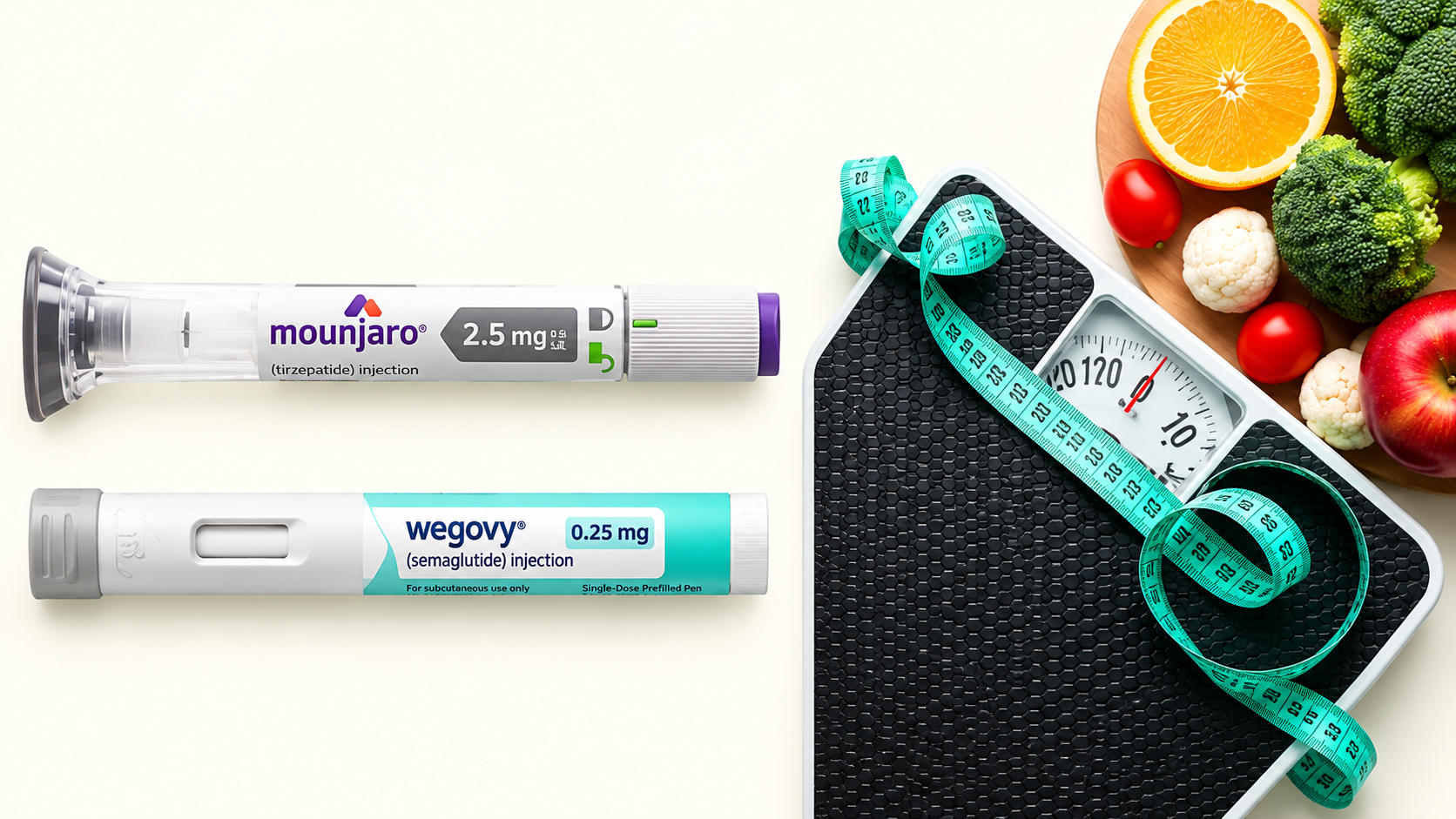
The assessment follows a defined sequence: height, weight, BMI and blood pressure are measured; obesity-related conditions and relevant medical history are assessed; appropriate laboratory tests are ordered where clinically indicated; eligibility, contraindications, medication choices, potential benefits, side effects and your preferences are reviewed; and a treatment and follow-up plan is agreed. Measurements and body-composition assessment are part of that, and the physician then sets goals, provides the prescription and dosing instructions with a gradual dose increase per product, and gives diet and lifestyle guidance.
The initial consultation usually takes approximately 30 to 60 minutes as a planning estimate. No anesthesia or sedation is required, and there is no downtime. Injectable medication may cause a brief pinch or mild discomfort at the injection site.
Stage | What happens |
|---|---|
Starting and dose increases | Nausea, bloating or stomach discomfort are more noticeable |
Every 4–8 weeks | Follow-up during the initial dose-adjustment period |
3–6 months | Noticeable weight loss generally develops |
6–12 months or longer | Weight loss may continue |
Every 3–6 months | Follow-up once treatment is stable |
Approximately one to three days in Korea covers the consultation and the start of treatment, with flying home one to three days afterwards.
That short stay creates the central practical question for an international patient: this is a treatment with a follow-up schedule measured in months, and the schedule is not optional. Dose adjustment, side-effect monitoring and progress review are how the treatment is made to work safely. Establishing before you start who will provide that follow-up, and how, is as important as the first prescription.
Safety, Precision, and Clinic Standards
Common adverse effects include nausea, diarrhea, vomiting, constipation, abdominal discomfort and other gastrointestinal symptoms, along with headache or fatigue in some patients. Symptoms are often more noticeable when treatment begins or when the dose increases.
Important risks include pancreatitis, gallbladder problems, dehydration-related kidney injury, severe gastrointestinal reactions, allergic reactions, and hypoglycemia when used alongside certain diabetes medicines. Severe or persistent abdominal pain, repeated vomiting, or signs of dehydration require prompt medical attention rather than waiting for the next appointment.
One combination should be ruled out explicitly: semaglutide should not be combined with tirzepatide or with another GLP-1 receptor agonist. Appropriate combinations are medication plus nutrition counseling, physical activity and behavioral support, together with management of type 2 diabetes, hypertension, dyslipidemia or sleep apnea where those are present.
What DERMORE Clinic states about its own standards is this. Consultations and treatments are led by a board-certified dermatologist and a board-certified internal medicine specialist. Treatment planning is personalized through one-on-one consultation to assess individual needs and suitability. The clinic also provides dedicated pre-treatment and post-treatment care, including intensive care programs, and its stated philosophy is "Value Beyond Skin" — care that goes beyond external appearance to support inner confidence and overall health.
DERMORE Clinic occupies approximately 330 m², about 100 pyeong, on the third floor of the Yeonseung Building in Gangnam, and every skin-care treatment room in the clinic is a private room.
DERMORE Clinic is a Registered Medical Institution for Attracting Foreign Patients, registered with the Republic of Korea's Ministry of Health and Welfare under the Medical Overseas Expansion and Foreign Patients Attraction Act. That registration covers the treatment of international patients; it is not a facility accreditation.
Combining GLP-1 Treatment with Other Treatments
Medication works alongside nutrition, activity and behavioral support rather than instead of them, and alongside the management of weight-related conditions where those exist.
Medical Weight Loss, where the clinic's wider weight-management approach is set out.
Functional Medicine & IV Therapy, where testing and nutritional support are part of the same plan.
Facial & Body Contouring, where localized contour is a separate question from weight — and not a substitute for managing it.
The Bottom Line
GLP-1 medicines act on appetite, fullness and blood-glucose regulation, prescribed alongside diet, activity and supervision.
Trials reported approximately 15% mean weight loss with semaglutide 2.4 mg over 68 weeks, and approximately 15–21% with tirzepatide over 72 weeks.
Eligibility follows prescribing criteria: BMI 30 or above, or 27 or above with a weight-related condition.
A personal or family history of medullary thyroid carcinoma or MEN2, and pregnancy, rule the treatment out.
Follow-up every four to eight weeks during dose adjustment is part of the treatment, not an optional extra.
Frequently Asked Questions

Am I eligible for GLP-1 weight loss treatment? Eligibility follows the medication's prescribing criteria: an initial BMI of 30 kg/m² or higher, or 27 kg/m² or higher with at least one weight-related condition such as hypertension, dyslipidemia or type 2 diabetes. An individual medical assessment confirms it, and the exact indication varies by product.
Who should not take these medicines? People with a personal or family history of medullary thyroid carcinoma or multiple endocrine neoplasia syndrome type 2. They should not be used during pregnancy, and previous pancreatitis, gallbladder disease, severe gastrointestinal problems, allergies and diabetes medications all require assessment.
How much weight might I lose? In separate clinical trials, semaglutide 2.4 mg produced approximately 15% mean weight loss over 68 weeks in adults without diabetes, and tirzepatide approximately 15% to 21% depending on the maintenance dose, over 72 weeks. These are means, and individual results vary.
How long before I notice a change? Noticeable weight loss generally develops over three to six months, and may continue for six to twelve months or longer.
Is it painful? Is there downtime? No anesthesia is needed and there is no downtime. Injectable medication may cause a brief pinch or mild discomfort at the injection site, and nausea, bloating or stomach discomfort may follow starting treatment or increasing the dose.
How many days should I stay in Korea? Approximately one to three days for the consultation and the start of treatment, with flying home one to three days afterwards. The follow-up schedule is the part that needs planning.
What side effects are common? Nausea, diarrhea, vomiting, constipation, abdominal pain, bloating, and sometimes headache or fatigue — more noticeable at the start and at dose increases. Severe or persistent abdominal pain, repeated vomiting or signs of dehydration need prompt medical attention.
Why does the FDA warn about compounded versions? Because unapproved versions do not undergo review for safety, effectiveness and quality before being marketed. Its advice is to obtain a prescription from your doctor and fill it at a state-licensed pharmacy.
Book a Consultation at DERMORE Clinic
If you are considering GLP-1 weight loss treatment in Gangnam, Seoul, the consultation is a medical assessment — eligibility, contraindications, laboratory tests where indicated — and the place to settle how follow-up will work once you are home.
DERMORE Clinic is at 3F, Yeonseung Building, 228 Dosan-daero, Gangnam-gu, Seoul 06048, Republic of Korea. Consultation hours are Monday to Friday from 10:00 to 19:00 KST and Saturday from 10:00 to 16:30 KST, with a weekday lunch break from 13:00 to 14:00 KST. The Wednesday schedule varies by holiday week, and the clinic is closed on Sundays and public holidays.
To book a consultation, contact DERMORE Clinic through its contact page, by phone on +82-2-541-3888, or by email at info@dermoreseoul.com. Consultations for international patients are available in English.\n\n### Disclaimer\n\nFor general information only. This page does not replace professional medical advice, diagnosis or treatment. Whether any treatment described here is appropriate for you, what it can realistically achieve and what risks it carries are determined in an individual consultation with a qualified medical professional at DERMORE Clinic. Individual results vary with skin condition, medical history, the technology selected and the course of recovery.\n\n### Sources & Further Reading\n\n- U.S. Food and Drug Administration — FDA's Concerns with Unapproved GLP-1 Drugs Used for Weight Loss
Other Treatments
Explore additional dermatology and anti-aging treatments offered at DERMORE Clinic.

EMFACE Facial Muscle Lifting
EMFACE facial muscle lifting is a non-invasive treatment that combines synchronized radiofrequency energy with HIFES™ muscle stimulation, so that one session addresses both the skin and the facial muscles beneath it.
Learn More

ELSA Local Lipolysis
ELSA Local Lipolysis is a localized fat-reduction treatment intended to reduce stubborn fat deposits in selected body areas and improve body contours.
Learn More

Pre- & Post-Procedure Skin Care
Pre- and post-procedure skin care is personalized guidance and supportive skin care before and after cosmetic or dermatological treatments.
Learn More