DERMORE Clinic Gangnam, Seoul · Value Beyond Skin · International Patient Support


Medical Weight Loss · Needs Clinic Confirmation
Medical Diet Programs
Medical diet programs are physician-guided weight management programs built around personalized nutrition plans, lifestyle modification and regular progress monitoring.
Schedule a ConsultationMedical Diet Programs in Seoul, Korea

Medically reviewed by Dr. Seung-Gon Jeong, board-certified internal medicine specialist DERMORE Clinic, Gangnam-gu, Seoul
Medical diet programs are physician-guided weight management programs built around personalized nutrition plans, lifestyle modification and regular progress monitoring. At DERMORE Clinic in Gangnam, Seoul, they belong to Medical Weight Loss, and the word carrying the weight in that description is physician-guided.
What Is a Medical Diet Program?
A medical weight-management program differs from a diet plan in what sits behind it.
The plan is personalized to the individual rather than issued as a template.
It may include dietary counseling, physical activity recommendations, and medical treatment when appropriate.
Progress is monitored regularly rather than left to the scale at home.
Assessment may draw on body-composition analysis and, where indicated, laboratory, hormone, genetic and gut-microbiome testing.
Prescription medication is included only where the patient is eligible and it is clinically appropriate.
What it offers is structured support for changing eating habits, gradual weight loss, and improvement in some weight-related health measures. What it does not offer is speed. Weight managed down gradually with supervision is the outcome this kind of program is designed for, and a program promising anything faster is describing something else.
Patients usually come for medical supervision, an individualized plan, an assessment of weight-related health factors, and access to prescription treatment where that is appropriate.
Who Performs Medical Diet Programs at DERMORE Clinic
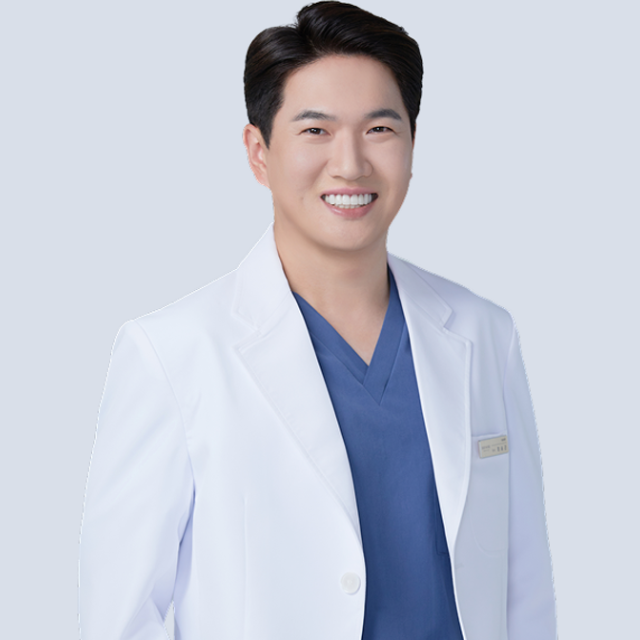
Dr. Seung-Gon Jeong
Board-Certified Internal Medicine Specialist
Dr. Seung-Gon Jeong is the physician responsible for medical weight loss at DERMORE Clinic and the named reviewer for this page. This page does not claim that one specific doctor personally performs every session of this service; the treating physician is confirmed when the treatment is scheduled.
Dr. Seung-Gon Jeong is a Representative Director of DERMORE Clinic and a board-certified internal medicine specialist. His stated areas of practice are anti-aging treatments, lifting, volume enhancement, functional medicine, obesity management, body contouring and IV nutrient therapy. He was previously a director at Rienjang Clinic. He is a certified obesity specialist through the Korean Society for the Study of Obesity and a certified nutritional supplement prescription specialist through the Korean Society of Nutritional Supplement Prescription, and he is a member of the Korean Society of Functional Medicine, the Korean Society of Aesthetic Plastic and Laser Medicine, the Korean Filler Society and the Korean Society of Internal Medicine.
The obesity certification and the internal medicine specialty are the credentials that matter for this service. A weight program that may lead to prescription medication needs someone able to decide whether medication is appropriate at all — and able to say that it is not.
Every treatment at DERMORE Clinic begins with a one-on-one consultation with a physician, supported by the Metaview facial skin analysis system, and the treatment plan is then built around the patient's skin condition, medical history, expectations and schedule rather than a fixed menu.
What the Assessment Can Include
The reason a medical program can be individualized is that it starts from measurement rather than from assumption.
Body-composition analysis distinguishes between weight and what the weight is made of, which matters because two people at the same weight can need quite different plans. Where there is a clinical reason for it, assessment may extend to laboratory testing, and the clinic's broader wellness services also list hormone, genetic and gut-microbiome assessment among the options. Not every patient needs every test, and a program that orders the full panel for everyone is selling tests rather than investigating a question.
What that assessment buys is a plan addressed to your situation: whether a weight-related condition is present and needs managing in parallel, whether medication is appropriate at all, what a realistic rate of change looks like for you, and which parts of your current eating pattern are worth changing first.
It also establishes a baseline. Progress over four to twelve weeks is judged against where you started — on weight trends, on adherence, on tolerability and on any relevant health measures — and a baseline recorded properly at the start is what makes that judgment possible rather than impressionistic.
Who Is a Good Candidate for a Medical Diet Program?
Adults who need help managing excess weight.
Adults whose weight is affecting their health.
Adults for whom previous lifestyle changes have not been sufficient on their own.
Eligibility for medication, where it forms part of the plan, depends on the specific drug, your medical history, local prescribing rules and the clinician's assessment. Pregnancy or planning a pregnancy generally rules out the use of weight-loss medication. Some medications carry additional contraindications — semaglutide and tirzepatide products, for example, carry warnings concerning a personal or family history of medullary thyroid carcinoma or multiple endocrine neoplasia syndrome type 2.
The alternatives are worth naming, because a medical program is not the only reasonable route: nutrition and lifestyle counseling alone, a registered dietitian's plan, medically supervised prescription medication where appropriate, and bariatric surgery for selected patients. Body contouring may change the appearance of selected areas, but it is not a substitute for managing excess weight or its health effects — a distinction worth holding onto in a clinic that offers both.
What to Expect: Procedure, Recovery, and Results Timeline

The initial consultation and assessment typically take approximately 30 minutes, with further visits depending on the plan agreed. No anesthesia is required for a consultation or diet-planning appointment, and there is normally no physical recovery period — you can generally resume ordinary daily activities the same day.
If prescription medication forms part of the plan, regular follow-up becomes important for dose adjustment, side-effect monitoring and progress review.
Stage | What happens |
|---|---|
First days | Dietary habits and appetite may begin to change; a reliable change in body fat cannot be promised within days |
Weeks 4–12 | Progress can be assessed through weight trends, adherence, tolerability and relevant health measures |
3–6 months | A more meaningful assessment of sustained progress is often possible |
For an initial consultation and diet-plan assessment, one day in Korea is generally sufficient, and after a routine consultation and planning appointment most patients can fly home the same day if they feel well.
The pace is the part most worth setting expectations about. A reliable change in body fat cannot be promised within days, however disciplined the first week is, and the figures that matter in weight management are trends over weeks rather than readings on any single morning. Weight fluctuates with fluid, with the time of day and with the days around it; a program that reacts to each fluctuation is reacting to noise. Four to twelve weeks is the window in which progress starts to be legible, and three to six months is where sustained progress can be assessed properly.
A second expectation worth setting concerns what the plan asks of you. Structured support for changing eating habits is exactly that — support for a change you make, rather than a treatment delivered to you. The clinical contribution is the assessment, the plan, the monitoring, and the judgment about whether medication belongs in the picture. The daily part is yours, and a program that pretends otherwise is unlikely to produce a result that lasts past the end of it.
That short stay makes the follow-up question unavoidable for an international patient. A program whose value lies in monitoring over months needs a plan for how that monitoring happens once you have left, and the honest version of this conversation happens at the first consultation rather than later.
Safety, Precision, and Clinic Standards
Dietary counseling itself generally does not cause physical side effects. An unsuitable or overly restrictive plan can cause hunger, fatigue, constipation or nutritional deficiencies — which is one reason a plan built around an assessment is preferable to one downloaded from the internet.
Weight-loss medicines have drug-specific adverse effects. GLP-1-based medicines commonly cause gastrointestinal symptoms and can sometimes cause more serious complications, which is why eligibility, monitoring and follow-up are part of any program that includes them.
For a patient travelling from abroad, that last clause carries a practical obligation on both sides. A medicine started in one country and continued in another needs someone reviewing dose, tolerance and progress throughout, and the arrangement for that should be explicit before the first prescription rather than improvised afterwards.
What DERMORE Clinic states about its own standards is this. Consultations and treatments are led by a board-certified dermatologist and a board-certified internal medicine specialist. Treatment planning is personalized through one-on-one consultation to assess individual needs and suitability. The clinic also provides dedicated pre-treatment and post-treatment care, including intensive care programs, and its stated philosophy is "Value Beyond Skin" — care that goes beyond external appearance to support inner confidence and overall health.
DERMORE Clinic occupies approximately 330 m², about 100 pyeong, on the third floor of the Yeonseung Building in Gangnam, and every skin-care treatment room in the clinic is a private room.
DERMORE Clinic is a Registered Medical Institution for Attracting Foreign Patients, registered with the Republic of Korea's Ministry of Health and Welfare under the Medical Overseas Expansion and Foreign Patients Attraction Act. That registration covers the treatment of international patients; it is not a facility accreditation.
Combining a Medical Diet Program with Other Treatments
Nutrition and lifestyle changes may be combined with prescribed weight-management medication when that is appropriate. Combining a weight program with cosmetic contouring is a different matter: the two address different problems, and sequencing them sensibly usually means managing weight first.
GLP-1 Weight Loss Treatment, where medication forms part of the plan.
Functional Medicine & IV Therapy, where testing and nutritional support belong in the same assessment.
Facial & Body Contouring, where localized contour is addressed once weight is stable.
The Bottom Line
The program is physician-guided: personalized nutrition, lifestyle modification and regular monitoring.
Medication is included only where you are eligible and it is clinically appropriate.
The initial consultation and assessment take approximately 30 minutes, with no recovery period.
Progress is assessed at four to twelve weeks, with a meaningful picture at three to six months.
Body contouring is not a substitute for managing excess weight or its health effects.
Frequently Asked Questions

Am I a good candidate for a medical diet program? Adults who need help managing excess weight, particularly where weight is affecting health or where previous lifestyle changes have not been sufficient.
Will I be prescribed medication? Only if you are eligible and it is clinically appropriate. Eligibility depends on the specific drug, your medical history, local prescribing rules and the clinician's assessment.
Who should not take weight-loss medication? Pregnancy or planning a pregnancy generally rules it out. Some medications carry additional contraindications — semaglutide and tirzepatide products carry warnings concerning a personal or family history of medullary thyroid carcinoma or multiple endocrine neoplasia syndrome type 2.
How long is the first appointment? The initial consultation and assessment typically take approximately 30 minutes, with further visits depending on the plan.
Is there any downtime? No. There is normally no physical recovery period after a consultation or personalized diet plan, and ordinary daily activities can resume the same day.
How many days should I stay in Korea? One day is generally sufficient for an initial consultation and diet-plan assessment, with flying home the same day usually possible if you feel well.
When will I see results? Habits and appetite may begin to change in the first days, but a reliable change in body fat cannot be promised that quickly. Progress is assessed over four to twelve weeks, with a more meaningful picture at around three to six months.
Can an overly strict diet be harmful? Yes. A plan that is unsuitable or too restrictive may cause hunger, fatigue, constipation or nutritional deficiencies, which is exactly what an individualized, supervised plan is meant to avoid.
Book a Consultation at DERMORE Clinic
If you are considering a medical diet program in Gangnam, Seoul, the consultation assesses what is actually driving the weight — and settles how the monitoring will continue after you fly home.
DERMORE Clinic is at 3F, Yeonseung Building, 228 Dosan-daero, Gangnam-gu, Seoul 06048, Republic of Korea. Consultation hours are Monday to Friday from 10:00 to 19:00 KST and Saturday from 10:00 to 16:30 KST, with a weekday lunch break from 13:00 to 14:00 KST. The Wednesday schedule varies by holiday week, and the clinic is closed on Sundays and public holidays.
To book a consultation, contact DERMORE Clinic through its contact page, by phone on +82-2-541-3888, or by email at info@dermoreseoul.com. Consultations for international patients are available in English.
Disclaimer
For general information only. This page does not replace professional medical advice, diagnosis or treatment. Whether any treatment described here is appropriate for you, what it can realistically achieve and what risks it carries are determined in an individual consultation with a qualified medical professional at DERMORE Clinic. Individual results vary with skin condition, medical history, the technology selected and the course of recovery.
Sources & Further Reading
- U.S. Food and Drug Administration — FDA's Concerns with Unapproved GLP-1 Drugs Used for Weight Loss, on obtaining weight-loss medication through a prescribing doctor
Other Treatments
Explore additional dermatology and anti-aging treatments offered at DERMORE Clinic.

EMFACE Facial Muscle Lifting
EMFACE facial muscle lifting is a non-invasive treatment that combines synchronized radiofrequency energy with HIFES™ muscle stimulation, so that one session addresses both the skin and the facial muscles beneath it.
Learn More

ELSA Local Lipolysis
ELSA Local Lipolysis is a localized fat-reduction treatment intended to reduce stubborn fat deposits in selected body areas and improve body contours.
Learn More

Pre- & Post-Procedure Skin Care
Pre- and post-procedure skin care is personalized guidance and supportive skin care before and after cosmetic or dermatological treatments.
Learn More