DERMORE Clinic Gangnam, Seoul · Value Beyond Skin · International Patient Support


Acne, Scar & Pore Care · Needs Clinic Confirmation
Acne Scar Subcision
Acne scar subcision is a minimally invasive procedure that releases the fibrous bands pulling depressed acne scars down beneath the skin.
Schedule a ConsultationAcne Scar Subcision in Seoul, Korea

Medically reviewed by Dr. Song-Hee Han, board-certified dermatologist, MD, PhD DERMORE Clinic, Gangnam-gu, Seoul
Acne scar subcision is a minimally invasive procedure that releases the fibrous bands pulling depressed acne scars down beneath the skin. At DERMORE Clinic in Gangnam, Seoul, it belongs to Acne, Scar & Pore Care, and it is the only treatment in that group that addresses what is tethering the scar rather than what is visible on the surface.
What Is Acne Scar Subcision?
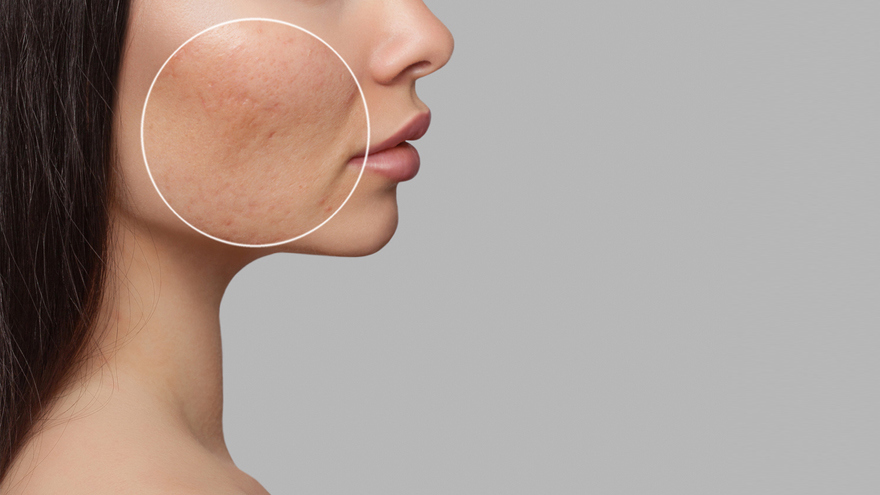
A rolling scar is not a hole in the skin. It is skin being pulled downwards from underneath.
Fibrous bands beneath the skin tether the scar to deeper tissue, creating the depression.
Subcision releases those bands so that the tethered skin can lift.
It may improve the appearance of rolling scars and uneven skin texture.
Patients may notice smoother texture and gradual improvement in scar appearance, depending on scar depth and individual healing.
Results vary with scar type and with how an individual heals.
Understanding the mechanism explains why this procedure suits some scars and not others. A surface-resurfacing treatment smooths the top of the skin; it cannot release a band underneath it. Equally, subcision does nothing for an ice-pick scar whose problem is a narrow deep track rather than a tether. Matching the technique to the scar type is the entire skill here.
Patients from the United States often look at Korea for this procedure to improve depressed scars, rolling scars and uneven texture, and to compare treatment plans and specialist experience.
Why Scar Type Decides the Technique
Acne scars are usually described by shape, and the shape reflects what happened in the tissue.
Rolling scars are broad, shallow depressions with sloping edges, produced by fibrous bands tethering the skin from below — the pattern this procedure is designed for. Boxcar scars have defined edges and a flat base, and depending on their depth may respond better to resurfacing. Ice-pick scars are narrow and deep, and a technique such as TCA CROSS is often more appropriate for them than either subcision or resurfacing. Most faces carry more than one type, which is why a single technique rarely produces a uniform result and why a plan may be staged across several visits.
That is also why an honest consultation spends time on classification rather than moving straight to a recommendation. The question "which of my scars will this help" has a specific answer, and a clinician who gives it to you scar by scar is describing a plan rather than selling a procedure.
Pigment left behind by past acne is a separate issue again. A dark or red mark where a spot used to be is not a scar and does not need a scar treatment; it fades with time and is addressed, where needed, with pigment-directed approaches. Treating it as scarring leads to procedures that were never going to help it.
Who Performs Acne Scar Subcision at DERMORE Clinic
|
|
Dr. Song-Hee Han | Dr. Seung-Gon Jeong |
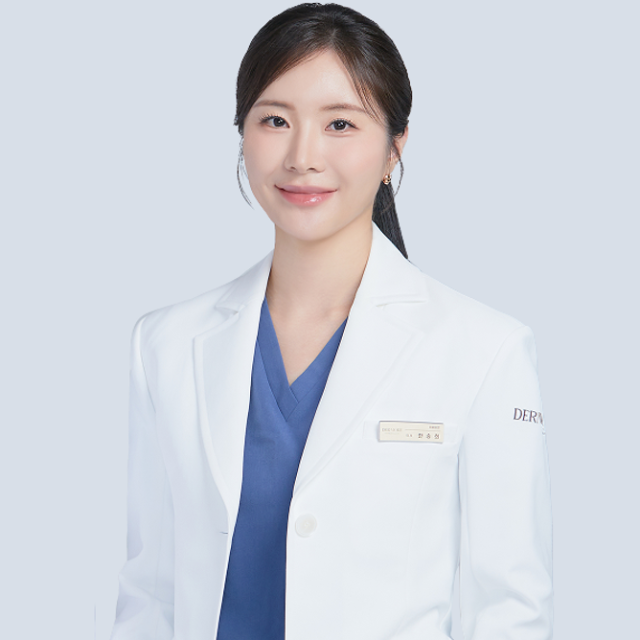
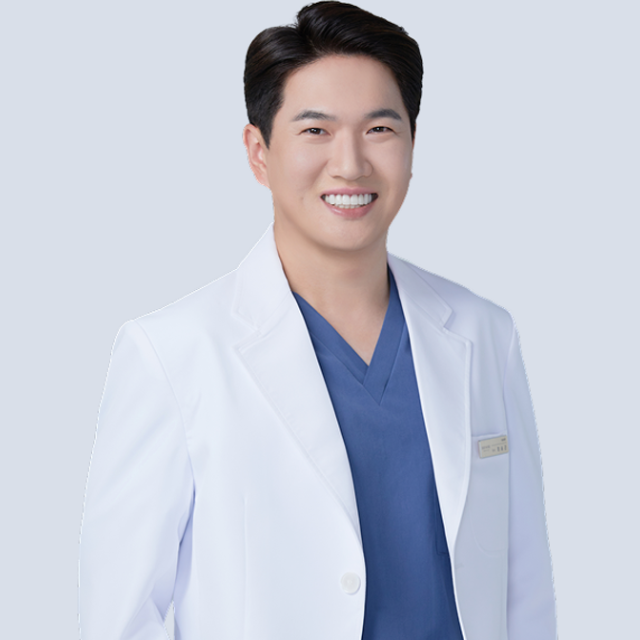
Both of DERMORE Clinic's physicians perform treatments in this category, and both hold a representative director role. This page does not claim that one specific doctor personally performs every session of this service; the treating physician is confirmed when the treatment is scheduled.
Dr. Song-Hee Han leads this area of the clinic's practice and is the named reviewer for this page. Dr. Song-Hee Han is a Representative Director of DERMORE Clinic and a board-certified dermatologist who holds a Doctor of Medicine degree and a PhD. Her stated areas of specialization are anti-aging treatments, lifting, volume enhancement, pigmentation and sensitive skin care. She was previously a director at Mifamoon Dermatology Clinic, Purin Dermatology Clinic and the Sinsa branch of The Hill Dermatology Clinic. She is a full member of the Korean Dermatological Association and the Korean Clinical Dermatology Treatment Research Association, and a member of the Korean Society for Laser Dermatology and the Korean Society of Dermatologic Anti-Aging Medicine.
Dr. Seung-Gon Jeong also performs treatments in this category. Dr. Seung-Gon Jeong is a Representative Director of DERMORE Clinic and a board-certified internal medicine specialist. His stated areas of practice are anti-aging treatments, lifting, volume enhancement, functional medicine, obesity management, body contouring and IV nutrient therapy. He was previously a director at Rienjang Clinic. He is a certified obesity specialist through the Korean Society for the Study of Obesity and a certified nutritional supplement prescription specialist through the Korean Society of Nutritional Supplement Prescription, and he is a member of the Korean Society of Functional Medicine, the Korean Society of Aesthetic Plastic and Laser Medicine, the Korean Filler Society and the Korean Society of Internal Medicine.
Every treatment at DERMORE Clinic begins with a one-on-one consultation with a physician, supported by the Metaview facial skin analysis system, and the treatment plan is then built around the patient's skin condition, medical history, expectations and schedule rather than a fixed menu.
Who Is a Good Candidate for Acne Scar Subcision?
Adults with depressed or rolling acne scars.
Adults with uneven skin texture from acne scarring.
Adults who want a physician-directed procedure and understand improvement is gradual.
The choice of treatment depends on acne type, scar type, skin type and goals. Patients with active skin infections, bleeding or clotting disorders, a history of keloid or hypertrophic scarring, or relevant recent oral retinoid use may be unsuitable, or may need to postpone while the situation is reviewed medically.
Among alternatives, microneedling or fractional laser resurfacing may help selected depressed scars, and TCA CROSS may be considered for certain ice-pick scars. The U.S. Food and Drug Administration notes that microneedling devices have been legally authorized to improve the appearance of facial acne scars in patients aged 22 or older, and that patients may need more than one procedure to get the desired improvement. Which of these approaches fits depends on the scar type, the skin characteristics and the clinical assessment — and more than one may be appropriate in sequence.
What to Expect: Procedure, Recovery, and Results Timeline
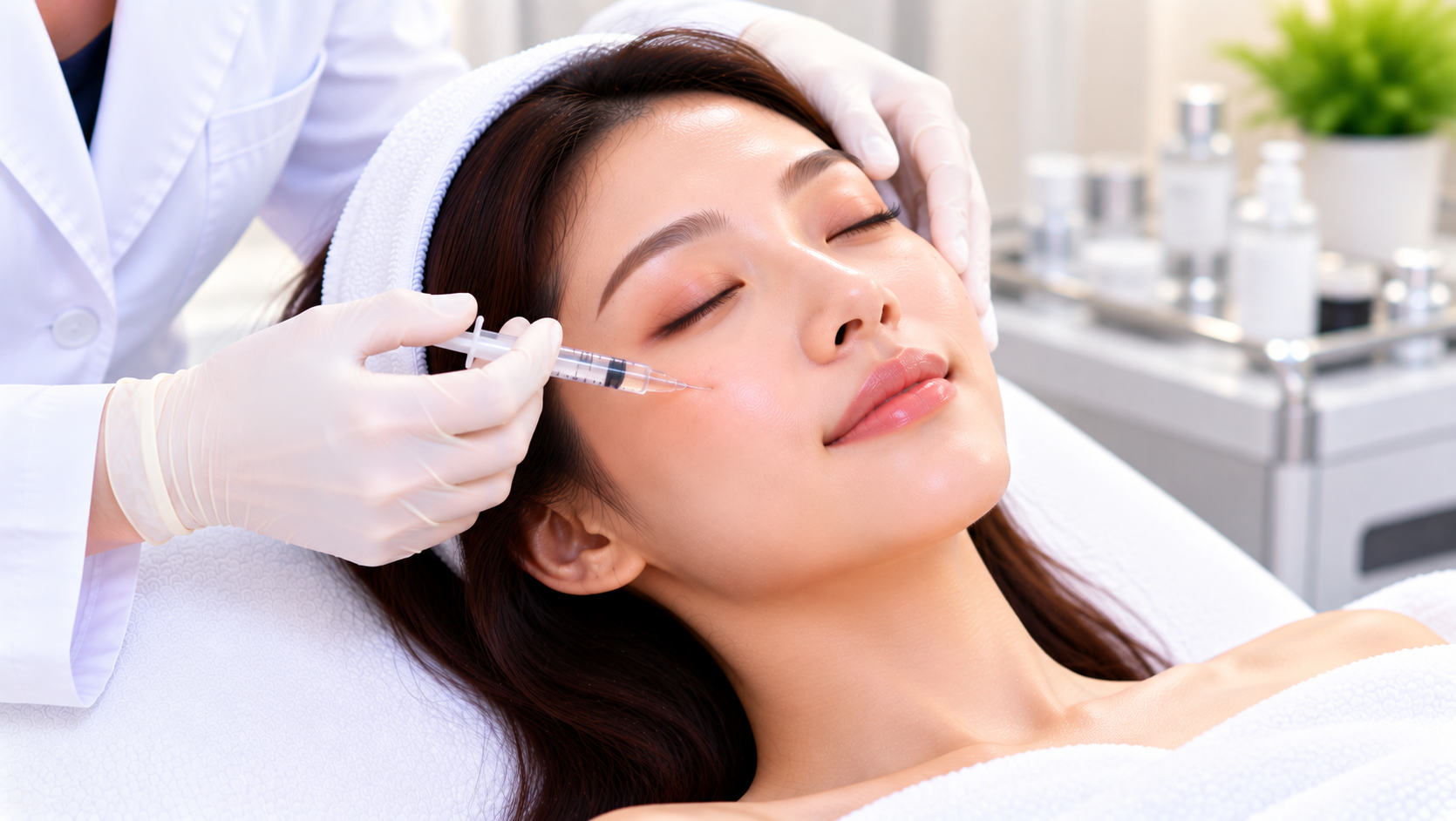
The procedure typically takes 30 to 60 minutes depending on the number and severity of the scars, and additional sessions and follow-up visits may be recommended.
Local anesthesia is typically applied to numb the treatment area beforehand. You may feel a brief pinch or pressure during the injection, and some pressure or pulling during the procedure itself — the pulling sensation is the bands releasing. Additional topical or local numbing measures may be used depending on the area and your sensitivity.
Stage | What happens |
|---|---|
Weeks 1–2 | Bruising and swelling generally improve |
Weeks 3–6 | Healing continues, depending on the area and individual recovery |
Weeks 2–4 | Initial improvement may be noticeable |
Weeks 4–8 | Gradual results develop |
Bruising is the defining feature of the early recovery here, and it is worth planning for rather than being surprised by: a procedure that works by releasing tissue under the skin produces visible bruising on the face for the first week or two in many patients.
A stay of approximately three to five days in Korea may be practical for treatment and an initial follow-up, depending on recovery and the clinic's recommendations. Patients may be able to fly home within one to three days after treatment.
Before the procedure, tell the clinician about bleeding or clotting disorders, any history of keloid or hypertrophic scarring, recent oral retinoid use, and all medications and supplements.
Afterwards, follow the aftercare instructions you are given, avoid pressure on the treated areas, and contact the clinic if pain, swelling or redness worsens or if you develop fever or unusual discharge.
The follow-up visit has a specific purpose with this procedure rather than being a courtesy. It is where the clinician checks whether the release has held, whether any firm areas are forming under the skin as it heals, and whether a further session or a different technique should be planned for the scars that responded least. If your schedule allows only one appointment, say so at the consultation — it changes what is reasonable to attempt.
Safety, Precision, and Clinic Standards
Possible effects include bruising, swelling, tenderness, bleeding or hematoma, infection, temporary pigmentation changes, persistent lumps and inadequate improvement. Rarely, nerve or blood-vessel injury or abnormal scarring may occur.
"Inadequate improvement" belongs on that list and is worth reading as a genuine possible outcome rather than a hedge. Scars that have been tethered for years do not always lift fully when released, and some patients need more than one session or a combination of techniques. A clinician who sets that expectation before the procedure is being accurate, not pessimistic.
What DERMORE Clinic states about its own standards is this. Consultations and treatments are led by a board-certified dermatologist and a board-certified internal medicine specialist. Treatment planning is personalized through one-on-one consultation to assess individual needs and suitability. The clinic also provides dedicated pre-treatment and post-treatment care, including intensive care programs, and its stated philosophy is "Value Beyond Skin" — care that goes beyond external appearance to support inner confidence and overall health.
DERMORE Clinic occupies approximately 330 m², about 100 pyeong, on the third floor of the Yeonseung Building in Gangnam, and every skin-care treatment room in the clinic is a private room.
DERMORE Clinic is a Registered Medical Institution for Attracting Foreign Patients, registered with the Republic of Korea's Ministry of Health and Welfare under the Medical Overseas Expansion and Foreign Patients Attraction Act. That registration covers the treatment of international patients; it is not a facility accreditation.
Combining Acne Scar Subcision with Other Treatments
Depending on the scar pattern, a dermatologist may consider subcision alongside microneedling, fractional laser treatment or other scar-specific procedures. Combining treatments is not necessary or appropriate for every patient, and a scar pattern that is uniform may need only one technique.
Laser & Light-Based Treatments, where resurfacing addresses the surface while subcision addresses the tether.
Collagen Stimulator Injections, where volume loss contributes to the depression.
Skin Boosters, where overall skin quality is part of the goal.
The Bottom Line
Subcision releases the fibrous bands that tether rolling and depressed scars from underneath.
It suits rolling and depressed scars; ice-pick scars and surface texture need different techniques.
The procedure takes 30 to 60 minutes under local anesthesia.
Bruising and swelling improve over one to two weeks, with healing continuing for three to six weeks.
Inadequate improvement is a real possible outcome, and more than one session may be needed.
Frequently Asked Questions
Am I a good candidate for acne scar subcision? Adults with depressed or rolling acne scars and uneven texture who want a physician-directed procedure. The choice depends on acne type, scar type, skin type and your goals.
Who should avoid or postpone treatment? Patients with active skin infections, bleeding or clotting disorders, a history of keloid or hypertrophic scarring, or relevant recent oral retinoid use may be unsuitable or need to postpone pending medical review.
How long does the procedure take? Typically 30 to 60 minutes depending on the number and severity of the scars, with additional sessions and follow-up visits possible.
Is it painful? What anesthesia is used? Local anesthesia is typically used. You may feel a brief pinch or pressure during the injection and some pressure or pulling during the procedure.
How much bruising should I expect? Bruising and swelling are common in the first one to two weeks. For a treatment on the face, that is worth building into travel and social plans.
How many days should I stay in Korea? Approximately three to five days may be practical for treatment and an initial follow-up, with flying home possible within one to three days.
When will I see results? Initial improvement may be noticeable within two to four weeks, with gradual results developing over four to eight weeks. Longevity varies with scar severity and individual response.
Will my scars disappear? No. The realistic outcome is improvement in appearance and smoother texture, and some scars respond more than others. Inadequate improvement is a recognised possible outcome.
Book a Consultation at DERMORE Clinic
If you are considering acne scar subcision in Gangnam, Seoul, the consultation is where your scars get classified — and classification decides the technique.
DERMORE Clinic is at 3F, Yeonseung Building, 228 Dosan-daero, Gangnam-gu, Seoul 06048, Republic of Korea. Consultation hours are Monday to Friday from 10:00 to 19:00 KST and Saturday from 10:00 to 16:30 KST, with a weekday lunch break from 13:00 to 14:00 KST. The Wednesday schedule varies by holiday week, and the clinic is closed on Sundays and public holidays.
To book a consultation, contact DERMORE Clinic through its contact page, by phone on +82-2-541-3888, or by email at info@dermoreseoul.com. Consultations for international patients are available in English.
Disclaimer
For general information only. This page does not replace professional medical advice, diagnosis or treatment. Whether any treatment described here is appropriate for you, what it can realistically achieve and what risks it carries are determined in an individual consultation with a qualified medical professional at DERMORE Clinic. Individual results vary with skin condition, medical history, the technology selected and the course of recovery.
Sources & Further Reading
- U.S. Food and Drug Administration — Microneedling Devices: legally marketed uses for facial acne scars, risks and patient information
Other Treatments
Explore additional dermatology and anti-aging treatments offered at DERMORE Clinic.

EMFACE Facial Muscle Lifting
EMFACE facial muscle lifting is a non-invasive treatment that combines synchronized radiofrequency energy with HIFES™ muscle stimulation, so that one session addresses both the skin and the facial muscles beneath it.
Learn More

ELSA Local Lipolysis
ELSA Local Lipolysis is a localized fat-reduction treatment intended to reduce stubborn fat deposits in selected body areas and improve body contours.
Learn More

Pre- & Post-Procedure Skin Care
Pre- and post-procedure skin care is personalized guidance and supportive skin care before and after cosmetic or dermatological treatments.
Learn More