DERMORE Clinic Gangnam, Seoul · Value Beyond Skin · International Patient Support


Exosome & Regenerative Therapy · Needs Clinic Confirmation
Autologous Exosome Therapy (ExoSmart)
Autologous Exosome Therapy, offered at DERMORE Clinic in Gangnam, Seoul as ExoSmart, is presented as a regenerative aesthetic treatment intended to support skin quality and rejuvenation using biological material obtained from the patient's...
Schedule a ConsultationAutologous Exosome Therapy (ExoSmart) in Seoul, Korea

Medically reviewed by Dr. Song-Hee Han, board-certified dermatologist, MD, PhD DERMORE Clinic, Gangnam-gu, Seoul
Autologous Exosome Therapy, offered at DERMORE Clinic in Gangnam, Seoul as ExoSmart, is presented as a regenerative aesthetic treatment intended to support skin quality and rejuvenation using biological material obtained from the patient's own body. It sits within Exosome & Regenerative Therapy, and the word that governs the whole page is autologous: the source material comes from you.
What Is Autologous Exosome Therapy?
The description below is the clinic's own, and the boundaries of what is claimed are deliberate.
The treatment is presented as a regenerative aesthetic treatment for skin quality and rejuvenation.
The biological material used is obtained from the patient's own body.
The exact process depends on the clinic's protocol and the product used.
The results depend on the material, the preparation method, the delivery technique, individual biology and the indication.
The timing, degree of improvement and duration of results are not firmly established for autologous exosome therapy as a general category.
That last line is not a hedge added by this page; it is the state of the field. A treatment whose outcomes are not firmly established can still be a reasonable choice for a patient who understands that, and an unreasonable one for a patient who has been told otherwise.
One expectation is set explicitly for this treatment: before proceeding, patients should receive a clear explanation of the source material, the preparation method, the intended use, the expected outcomes and the evidence supporting the treatment. If any of those five is missing from your consultation, ask for it.
Patients generally consider this treatment out of interest in regenerative aesthetic approaches, and for skin texture, hydration and overall skin appearance.
What Regulators Say About Exosome Products
Published regulatory guidance on this category is worth reading before a consultation rather than after it.
The U.S. Food and Drug Administration issued a public safety notification on exosome products in December 2019 after multiple reports of serious adverse events among patients treated with unapproved products marketed as containing exosomes. It states that there are currently no FDA-approved exosome products, and that as a general matter exosomes used to treat diseases and conditions in humans are regulated as drugs and biological products subject to premarket review and approval. It describes clinics making unsubstantiated claims about preventing, treating or curing diseases, and it tells patients to ask whether a treatment has been reviewed, to request the facts, to keep asking questions if an explanation is unclear, and to follow up with their own health care provider.
The agency's separate consumer information on regenerative medicine therapies exists for the same purpose: to put a patient in a position to ask the right questions before agreeing to a treatment in this field.
This guidance concerns products marketed in the United States under the U.S. regulatory framework. It is not a statement about this clinic, this treatment or Korean regulation, and nothing on this page claims any regulatory status for the treatment described. What the guidance provides is a checklist of questions, and those questions travel.
Who Performs Autologous Exosome Therapy at DERMORE Clinic
|
|
Dr. Song-Hee Han | Dr. Seung-Gon Jeong |
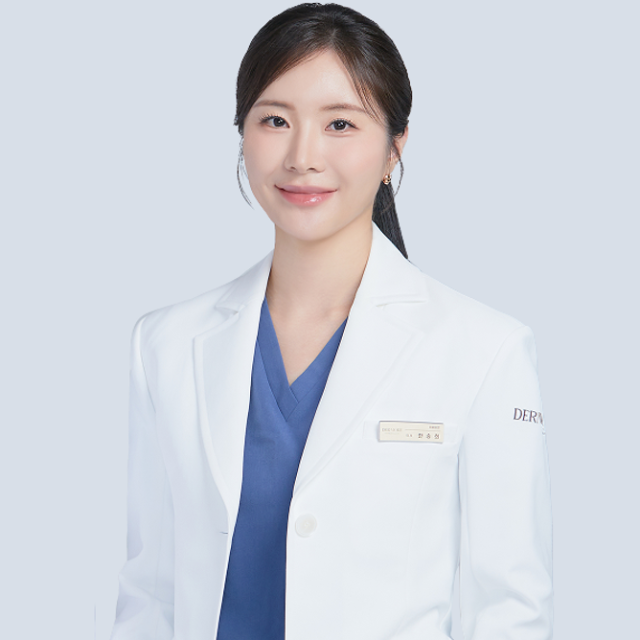
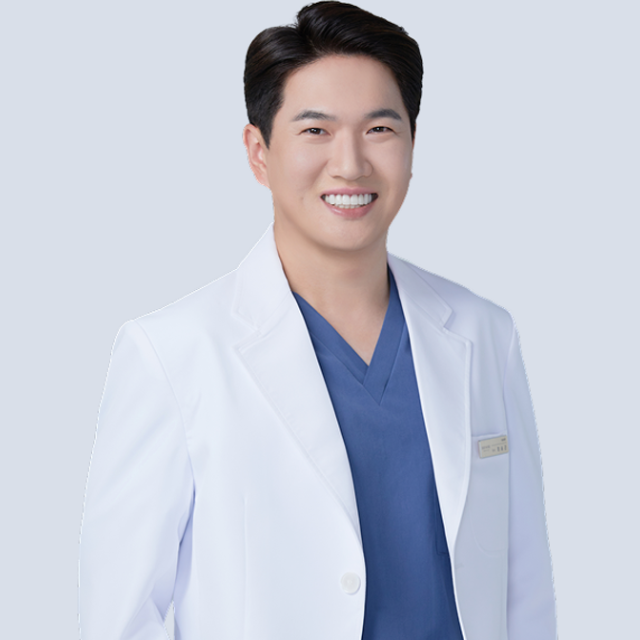
Both of DERMORE Clinic's physicians perform treatments in this category, and both hold a representative director role. This page does not claim that one specific doctor personally performs every session of this service; the treating physician is confirmed when the treatment is scheduled.
Dr. Song-Hee Han leads this area of the clinic's practice and is the named reviewer for this page. Dr. Song-Hee Han is a Representative Director of DERMORE Clinic and a board-certified dermatologist who holds a Doctor of Medicine degree and a PhD. Her stated areas of specialization are anti-aging treatments, lifting, volume enhancement, pigmentation and sensitive skin care. She was previously a director at Mifamoon Dermatology Clinic, Purin Dermatology Clinic and the Sinsa branch of The Hill Dermatology Clinic. She is a full member of the Korean Dermatological Association and the Korean Clinical Dermatology Treatment Research Association, and a member of the Korean Society for Laser Dermatology and the Korean Society of Dermatologic Anti-Aging Medicine.
Dr. Seung-Gon Jeong also performs treatments in this category. Dr. Seung-Gon Jeong is a Representative Director of DERMORE Clinic and a board-certified internal medicine specialist. His stated areas of practice are anti-aging treatments, lifting, volume enhancement, functional medicine, obesity management, body contouring and IV nutrient therapy. He was previously a director at Rienjang Clinic. He is a certified obesity specialist through the Korean Society for the Study of Obesity and a certified nutritional supplement prescription specialist through the Korean Society of Nutritional Supplement Prescription, and he is a member of the Korean Society of Functional Medicine, the Korean Society of Aesthetic Plastic and Laser Medicine, the Korean Filler Society and the Korean Society of Internal Medicine.
Every treatment at DERMORE Clinic begins with a one-on-one consultation with a physician, supported by the Metaview facial skin analysis system, and the treatment plan is then built around the patient's skin condition, medical history, expectations and schedule rather than a fixed menu.
Who Is a Good Candidate for Autologous Exosome Therapy?
Adults seeking improvement in skin quality.
Adults with realistic expectations about what is and is not established for this category.
Adults who are medically suitable following a consultation.
Suitability depends on the treatment area, the skin condition, the medical history, the source material and the clinic's protocol. Treatment may be unsuitable, or may need postponing, for patients with active skin infections, significant inflammation at the treatment site, certain blood or immune-system conditions, relevant allergies to treatment components, or medical conditions that affect healing.
At the consultation the clinician reviews your medical history, medications, allergies, skin concerns, previous aesthetic treatments and goals, assesses the treatment area, and explains the proposed procedure, the source and processing of the biological material, the potential benefits, the limitations, the alternatives, the risks and the aftercare. Alternatives depend on your goals and may include established skin-care regimens, microneedling, selected laser or energy-based treatments, injectable skin-quality treatments, or other procedures the clinician recommends.
How to weigh those alternatives is a fair thing to ask about directly. Several of them have been studied in randomized trials and pooled analyses, so there is a measured answer to what they change and by how much. This treatment does not yet have that, which is not the same as saying it does not work — it means the honest answer to "how much improvement should I expect" is less precise here than elsewhere. A patient who values precision in that answer has better options; a patient who has exhausted them and wants to try something additional is in a different position. Both are legitimate, and the difference between them belongs in the conversation rather than in the brochure.
What to Expect: Procedure, Recovery, and Results Timeline
A session follows five steps.
Consultation: the clinician evaluates suitability and confirms the treatment plan.
Preparation: the treatment area is cleansed and the required biological material is collected according to the protocol.
Processing: the material is prepared using the clinic's specified method with appropriate quality controls.
Administration: the prepared material is delivered using the technique the protocol specifies.
Aftercare: instructions are given and the need for follow-up is explained.
A straightforward session may take approximately 30 to 90 minutes or longer, and collection, processing and observation can extend the total visit considerably — this is not a drop-in appointment. Anesthesia depends on the collection and administration methods; topical numbing cream or local anesthesia may be used if appropriate, and temporary discomfort, stinging or tenderness during treatment is normal.
Stage | What happens |
|---|---|
1–3 days | Mild redness, swelling, tenderness or bruising typically improves |
24–48 hours | Most patients resume normal daily activities, depending on the methods used |
2–6 weeks | Any visible improvement in skin appearance may develop gradually |
For a straightforward treatment, approximately one to two days in Korea may be sufficient for consultation, treatment and an initial assessment, and you may generally be able to fly home within 24 to 48 hours provided the treating clinician confirms you are fit to travel.
Before treatment, attend the medical consultation and disclose all medications, supplements, allergies, medical conditions and previous aesthetic procedures, and follow the clinic's instructions on skin care, cleansing and any medication adjustments.
Afterwards, follow the written instructions for cleansing, skin care, sun protection and activity restrictions. Avoid unnecessary touching or rubbing of the treated area and postpone irritating skin products until the clinician advises otherwise.
Written instructions are worth insisting on rather than accepting verbally, particularly if you are flying out soon afterwards. They give you something to check against when a question arises at home, and they give any clinician you consult locally a record of what was done. The same applies to knowing how to contact the treating clinic from abroad: establish the route before you need it, not while you are trying to describe a symptom in a different time zone.
Safety, Precision, and Clinic Standards

Possible effects include temporary redness, swelling, tenderness, bruising, irritation and discomfort. Depending on the collection and delivery methods, additional risks include bleeding, infection, scarring, inflammatory reactions, and complications related to the source material or its processing.
That final category is specific to autologous treatments and is the reason the protocol matters as much as the product. When material is taken from the body, prepared, and returned to it, the handling in between is part of the procedure. Asking how the material is collected, how it is processed, and what quality controls apply is not an unreasonable question; it is the question.
What DERMORE Clinic states about its own standards is this. Consultations and treatments are led by a board-certified dermatologist and a board-certified internal medicine specialist. Treatment planning is personalized through one-on-one consultation to assess individual needs and suitability. The clinic also provides dedicated pre-treatment and post-treatment care, including intensive care programs, and its stated philosophy is "Value Beyond Skin" — care that goes beyond external appearance to support inner confidence and overall health.
DERMORE Clinic occupies approximately 330 m², about 100 pyeong, on the third floor of the Yeonseung Building in Gangnam, and every skin-care treatment room in the clinic is a private room.
DERMORE Clinic is a Registered Medical Institution for Attracting Foreign Patients, registered with the Republic of Korea's Ministry of Health and Welfare under the Medical Overseas Expansion and Foreign Patients Attraction Act. That registration covers the treatment of international patients; it is not a facility accreditation.
Combining Autologous Exosome Therapy with Other Treatments
Possible combinations include selected skin-rejuvenation procedures or medical-grade skin-care treatments, depending on your condition and the clinician's assessment.
Skin Boosters, where an injectable with a larger evidence base addresses the same concerns.
Laser & Light-Based Treatments, where texture or pigment is better matched to an established technology.
Medical Spa & Aesthetic Facials, where non-invasive skin care is part of the same plan.
The Bottom Line
The treatment uses biological material obtained from the patient's own body, prepared under the clinic's protocol.
You should receive a clear explanation of the source material, preparation, intended use, expected outcomes and supporting evidence before proceeding.
Timing, degree of improvement and duration of results are not firmly established for this category.
Collection, processing and observation extend the visit well beyond the treatment itself.
Regulators advise asking what has been reviewed and what evidence supports the claims — good questions in any country.
Frequently Asked Questions
Am I a good candidate for autologous exosome therapy? Adults seeking improvement in skin quality who have realistic expectations and are medically suitable after a consultation. Suitability depends on the treatment area, skin condition, medical history, source material and the clinic's protocol.
Who should avoid or postpone treatment? Patients with active skin infections, significant inflammation at the treatment site, certain blood or immune-system conditions, relevant allergies to treatment components, or medical conditions affecting healing.
What should the clinic explain to me before I agree? The source material, the preparation method, the intended use, the expected outcomes and the evidence supporting the treatment. All five, clearly, before proceeding.
How long does the visit take? A straightforward session may take approximately 30 to 90 minutes or longer, with collection, processing and observation extending the total visit.
Is it painful? What anesthesia is used? That depends on the collection and administration methods. Topical numbing cream or local anesthesia may be used, and mild stinging, pressure or tenderness during treatment with temporary soreness afterwards is common.
How many days should I stay in Korea? Approximately one to two days may be sufficient for a straightforward treatment, with flying home generally possible within 24 to 48 hours if the clinician confirms you are fit to travel.
When might I see a change? Any visible improvement may develop gradually over two to six weeks, depending on the protocol and individual response. The timing and degree are not firmly established for this category.
What side effects are common? Temporary redness, swelling, tenderness, bruising, irritation or discomfort, often improving within several days depending on the techniques used.
Book a Consultation at DERMORE Clinic

If you are considering autologous exosome therapy in Gangnam, Seoul, treat the consultation as the place where the five explanations above are given to you — not as a formality before a booking.
DERMORE Clinic is at 3F, Yeonseung Building, 228 Dosan-daero, Gangnam-gu, Seoul 06048, Republic of Korea. Consultation hours are Monday to Friday from 10:00 to 19:00 KST and Saturday from 10:00 to 16:30 KST, with a weekday lunch break from 13:00 to 14:00 KST. The Wednesday schedule varies by holiday week, and the clinic is closed on Sundays and public holidays.
To book a consultation, contact DERMORE Clinic through its contact page, by phone on +82-2-541-3888, or by email at info@dermoreseoul.com. Consultations for international patients are available in English.
Disclaimer
For general information only. This page does not replace professional medical advice, diagnosis or treatment. Whether any treatment described here is appropriate for you, what it can realistically achieve and what risks it carries are determined in an individual consultation with a qualified medical professional at DERMORE Clinic. Individual results vary with skin condition, medical history, the technology selected and the course of recovery.
Sources & Further Reading
U.S. Food and Drug Administration — Public Safety Notification on Exosome Products, 6 December 2019
Important Patient and Consumer Information About Regenerative Medicine Therapies — U.S. Food and Drug Administration
Other Treatments
Explore additional dermatology and anti-aging treatments offered at DERMORE Clinic.
EMFACE Facial Muscle Lifting
EMFACE facial muscle lifting is a non-invasive treatment that combines synchronized radiofrequency energy with HIFES™ muscle stimulation, so that one session addresses both the skin and the facial muscles beneath it.
Learn More

ELSA Local Lipolysis
ELSA Local Lipolysis is a localized fat-reduction treatment intended to reduce stubborn fat deposits in selected body areas and improve body contours.
Learn More

Pre- & Post-Procedure Skin Care
Pre- and post-procedure skin care is personalized guidance and supportive skin care before and after cosmetic or dermatological treatments.
Learn More