DERMORE Clinic Gangnam, Seoul · Value Beyond Skin · International Patient Support


Laser & Light-Based Treatments · Needs Clinic Confirmation
CO2 Laser Lesion Removal
CO₂ laser lesion removal uses a carbon dioxide laser to vaporize or remove selected skin lesions.
Schedule a ConsultationCO2 Laser Lesion Removal in Seoul, Korea

Medically reviewed by Dr. Song-Hee Han, board-certified dermatologist, MD, PhD DERMORE Clinic, Gangnam-gu, Seoul
CO₂ laser lesion removal uses a carbon dioxide laser to vaporize or remove selected skin lesions. At DERMORE Clinic in Gangnam, Seoul, it belongs to Laser & Light-Based Treatments, and unlike most treatments in that group it leaves a small wound — which changes both the aftercare and the questions worth asking first.
What Is CO2 Laser Lesion Removal?
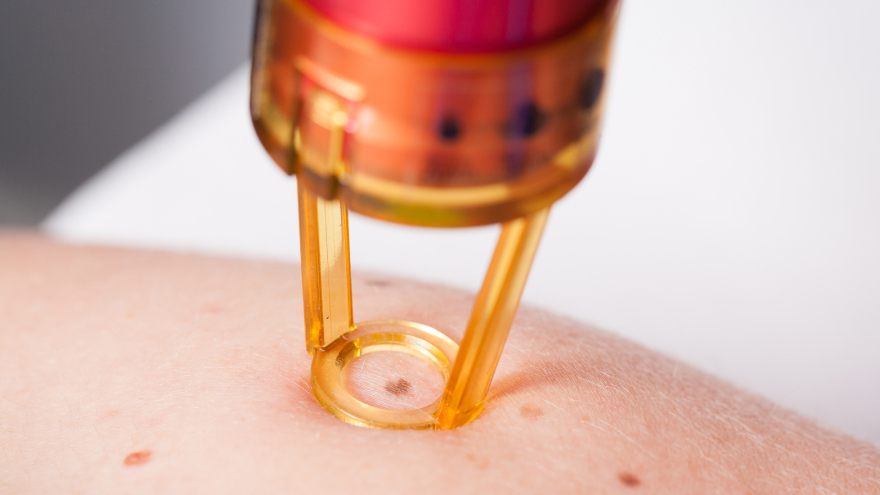
This is an ablative treatment: tissue is removed rather than heated and left in place.
A carbon dioxide laser delivers energy that vaporizes or removes the targeted tissue.
Suitability depends on the lesion type, its location, its size and the clinical assessment.
It can remove selected lesions and may improve the appearance of the treated area.
The degree of removal, the cosmetic result and the likelihood of recurrence depend on the lesion and the method used.
Scarring and pigment changes can occur.
The first question is never about the laser. It is whether the lesion has been examined and identified. Lesions suspected of being malignant are not suitable for immediate cosmetic laser removal, and a suspicious lesion may need biopsy or excision for diagnosis rather than vaporization — which destroys the tissue a pathologist would have examined.
International patients often consider this treatment for selected benign lesions and for the convenience of having dermatological care during a visit to Korea. The convenience is real; the assessment still comes first.
What the Evidence Says About Ablative Laser Treatment
The ablative-versus-non-ablative distinction is the one that most affects risk, and it is documented. A review published in the Journal of Cosmetic Dermatology notes that ablative fractional lasers carry a higher risk of adverse events such as scarring and post-inflammatory hyperpigmentation — particularly in patients with darker skin types — than non-ablative fractional lasers do.
That is the trade-off in a sentence. An ablative laser does something a gentler device cannot: it removes the lesion. In exchange it creates a wound, and wounds in skin that is prone to pigment change or to abnormal scarring carry a higher risk of leaving a mark of their own. For some lesions that trade is clearly worth making, and establishing whether yours is one of them is the purpose of the examination.
Who Performs CO2 Laser Lesion Removal at DERMORE Clinic
|
|
Dr. Seung-Gon Jeong | Dr. Song-Hee Han |
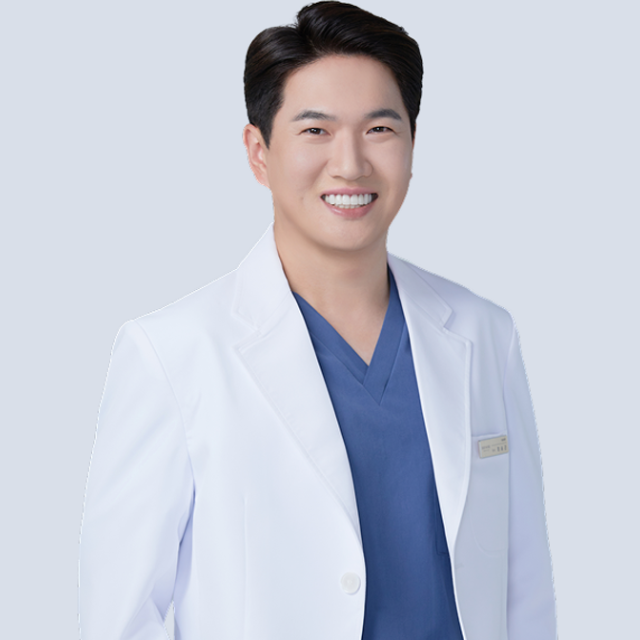

Both of DERMORE Clinic's physicians perform treatments in this category, and both hold a representative director role. This page does not claim that one specific doctor personally performs every session of this service; the treating physician is confirmed when the treatment is scheduled.
Dr. Song-Hee Han leads this area of the clinic's practice and is the named reviewer for this page. Dr. Song-Hee Han is a Representative Director of DERMORE Clinic and a board-certified dermatologist who holds a Doctor of Medicine degree and a PhD. Her stated areas of specialization are anti-aging treatments, lifting, volume enhancement, pigmentation and sensitive skin care. She was previously a director at Mifamoon Dermatology Clinic, Purin Dermatology Clinic and the Sinsa branch of The Hill Dermatology Clinic. She is a full member of the Korean Dermatological Association and the Korean Clinical Dermatology Treatment Research Association, and a member of the Korean Society for Laser Dermatology and the Korean Society of Dermatologic Anti-Aging Medicine.
Dr. Seung-Gon Jeong also performs treatments in this category. Dr. Seung-Gon Jeong is a Representative Director of DERMORE Clinic and a board-certified internal medicine specialist. His stated areas of practice are anti-aging treatments, lifting, volume enhancement, functional medicine, obesity management, body contouring and IV nutrient therapy. He was previously a director at Rienjang Clinic. He is a certified obesity specialist through the Korean Society for the Study of Obesity and a certified nutritional supplement prescription specialist through the Korean Society of Nutritional Supplement Prescription, and he is a member of the Korean Society of Functional Medicine, the Korean Society of Aesthetic Plastic and Laser Medicine, the Korean Filler Society and the Korean Society of Internal Medicine.
Every treatment at DERMORE Clinic begins with a one-on-one consultation with a physician, supported by the Metaview facial skin analysis system, and the treatment plan is then built around the patient's skin condition, medical history, expectations and schedule rather than a fixed menu.
Who Is a Good Candidate for CO2 Laser Lesion Removal?
Patients with selected benign lesions, such as certain skin tags, warts or other growths.
Patients whose lesions have been examined by a qualified dermatologist.
Patients with an active infection at the treatment site, or with lesions suspected of being malignant, may not be suitable for immediate cosmetic laser removal. Recent isotretinoin use, a history of abnormal scarring and the risk of pigment change all require individual evaluation.
Depending on the diagnosis, alternatives include shave removal, surgical excision, electrosurgery, cryotherapy or another lesion-specific treatment. A laser is one option among several, and the lesion decides which is appropriate.
Location matters as much as lesion type. The same growth on the back and on the centre of the face raises different questions about the cosmetic result, because skin heals differently in different places and because a small mark is more visible on some areas than others. Asking how the treated spot is expected to look once healed — not just whether the lesion will be gone — is a reasonable part of the conversation, and a clinician who answers it specifically is telling you they have thought about your skin rather than about the device.
What to Expect: Procedure, Recovery, and Results Timeline
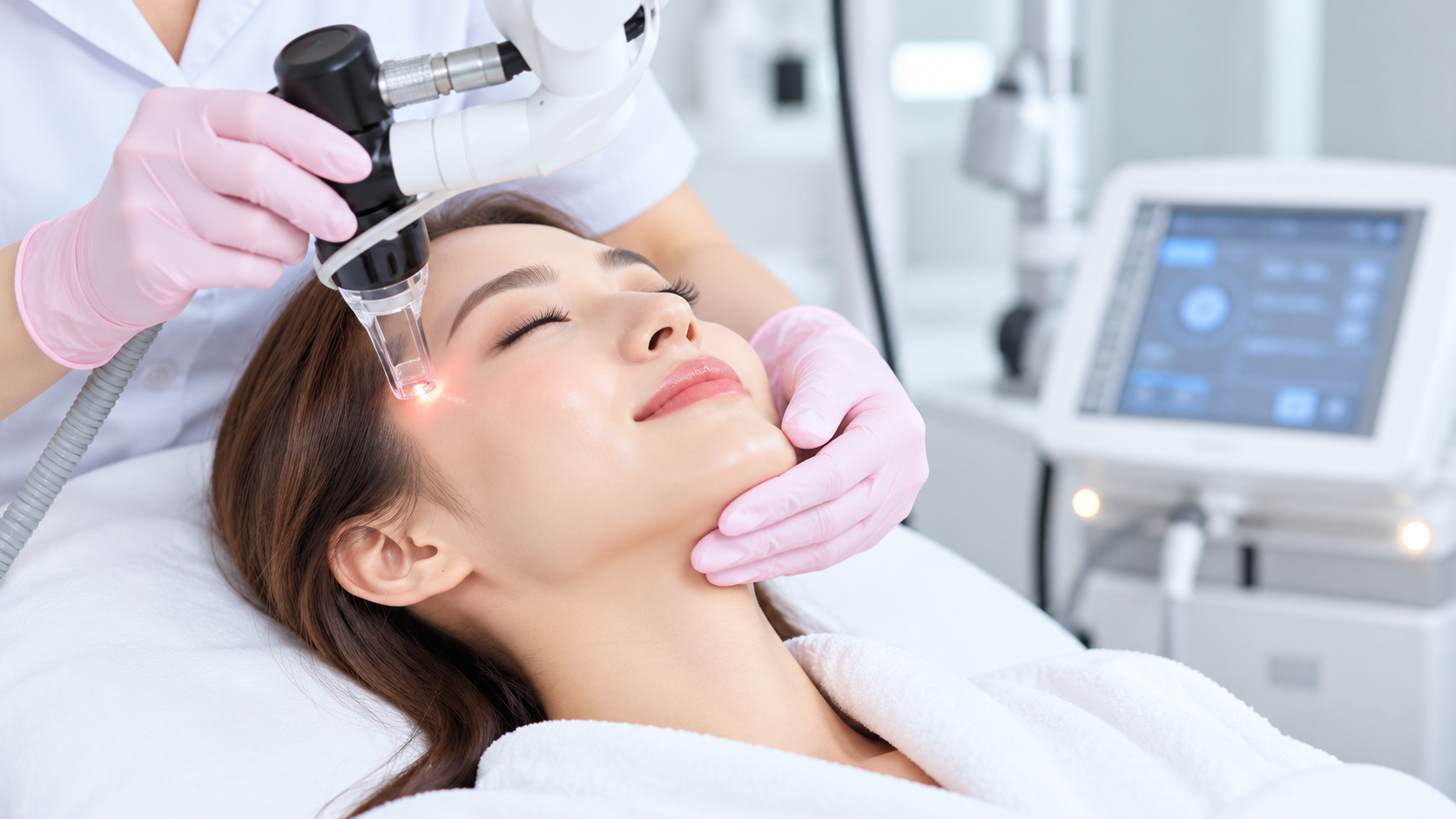
A session follows five steps.
Examine and identify the lesion.
Clean the treatment area.
Apply appropriate anesthesia if needed.
Use the laser to treat the selected lesion.
Give wound-care instructions and arrange follow-up if necessary.
A session typically takes 5 to 30 minutes including numbing and post-treatment care. Small lesions may be treated with topical numbing cream or a local anesthetic injection, with the choice depending on the lesion, the area and your comfort. Mild pain, stinging or a warm sensation may occur during treatment.
Stage | What happens |
|---|---|
First days | Redness, swelling, tenderness, crusting or minor oozing may occur |
1–3 weeks | Treated skin gradually heals as redness and crusting subside |
2–6 weeks | Initial results become visible, depending on the lesion type and depth |
Travel planning depends on the wound rather than on a standard timetable. The required stay depends on the lesion, on wound healing and on any follow-up needs, so confirm the recommended schedule with the treating dermatologist before travelling. For a small, uncomplicated lesion an early return may be possible, but there is no universal flight timeline — particularly if the wound needs dressing changes or an in-person review.
Before treatment, tell the clinician about recent isotretinoin use, any history of abnormal scarring or pigment change, and any medication or condition affecting healing.
Afterwards, follow the wound-care instructions exactly. Contact the clinic promptly if pain, swelling or redness worsens, or if you develop fever or unusual discharge.
Safety, Precision, and Clinic Standards
Possible effects include temporary redness, swelling, tenderness, crusting, infection, delayed healing, scarring, and lighter or darker skin pigmentation. The risks depend on the lesion, the treatment depth and the skin type.
Because this treatment creates a wound, infection and delayed healing are real rather than theoretical risks, and the signs to act on are specific: worsening pain, spreading redness, fever or unusual discharge. For a patient who flies home a few days after treatment, knowing how to reach the clinic from abroad is part of the aftercare rather than an afterthought.
The equipment includes a CO₂ laser device that delivers energy to remove targeted tissue, along with appropriate settings and smoke-evacuation equipment.
What DERMORE Clinic states about its own standards is this. Consultations and treatments are led by a board-certified dermatologist and a board-certified internal medicine specialist. Treatment planning is personalized through one-on-one consultation to assess individual needs and suitability. The clinic also provides dedicated pre-treatment and post-treatment care, including intensive care programs, and its stated philosophy is "Value Beyond Skin" — care that goes beyond external appearance to support inner confidence and overall health.
DERMORE Clinic is a Registered Medical Institution for Attracting Foreign Patients, registered with the Republic of Korea's Ministry of Health and Welfare under the Medical Overseas Expansion and Foreign Patients Attraction Act. That registration covers the treatment of international patients; it is not a facility accreditation.
Combining CO2 Laser Lesion Removal with Other Treatments
Additional procedures should be considered only after diagnosis and after assessing what the treated area needs in order to heal. Stacking treatments onto skin that is still healing is the most common way a straightforward removal turns into a longer problem.
Acne, Scar & Pore Care, where scarring is the concern once healing is complete.
Medical Spa & Aesthetic Facials, where gentle care supports recovery afterwards.
Skin Boosters, where skin quality is addressed once the area has settled.
The Bottom Line
An ablative laser removes tissue, so the treatment leaves a small wound and real wound care.
A lesion must be examined first; a suspicious lesion may need biopsy or excision rather than vaporization.
Ablative treatment carries a higher risk of scarring and post-inflammatory hyperpigmentation than non-ablative treatment, particularly in darker skin.
A session takes 5 to 30 minutes including numbing and aftercare.
Healing usually takes one to three weeks, with the result visible over two to six weeks.
Frequently Asked Questions
Am I a good candidate for CO2 laser lesion removal? Patients with selected benign lesions such as certain skin tags, warts or other growths, after examination by a qualified dermatologist.
Who should avoid or postpone treatment? Anyone with an active infection at the treatment site, and anyone whose lesion is suspected of being malignant — those are assessed rather than removed cosmetically. Recent isotretinoin use, a history of abnormal scarring and pigmentation risk require individual evaluation.
What if my lesion turns out to be suspicious? It is assessed rather than vaporized. A suspicious lesion may require biopsy or excision so that the tissue can be examined, which a laser removal would prevent.
How long does a session take? Typically 5 to 30 minutes including numbing and post-treatment care.
Is it painful? What anesthesia is used? Mild pain, stinging or a warm sensation may occur. Small lesions may be treated with topical numbing cream or a local anesthetic injection, depending on the lesion and the area.
How many days should I stay in Korea? It depends on the lesion, the wound healing and any follow-up needed. Confirm the recommended schedule with the treating dermatologist before travelling; for a small, uncomplicated lesion an early return may be possible.
How long does healing take? Redness and crusting usually subside within one to three weeks, with initial results visible over two to six weeks depending on the lesion type and depth.
What should I watch for after treatment? Worsening pain, swelling or redness, fever, or unusual discharge — all of which warrant prompt contact with the clinic rather than waiting.
Book a Consultation at DERMORE Clinic
If you are considering CO₂ laser lesion removal in Gangnam, Seoul, the examination comes first: what the lesion is decides whether a laser is the right answer, and whether removal should wait for a diagnosis.
DERMORE Clinic is at 3F, Yeonseung Building, 228 Dosan-daero, Gangnam-gu, Seoul 06048, Republic of Korea. Consultation hours are Monday to Friday from 10:00 to 19:00 KST and Saturday from 10:00 to 16:30 KST, with a weekday lunch break from 13:00 to 14:00 KST. The Wednesday schedule varies by holiday week, and the clinic is closed on Sundays and public holidays.
To book a consultation, contact DERMORE Clinic through its contact page, by phone on +82-2-541-3888, or by email at info@dermoreseoul.com. Consultations for international patients are available in English.
Disclaimer
For general information only. This page does not replace professional medical advice, diagnosis or treatment. Whether any treatment described here is appropriate for you, what it can realistically achieve and what risks it carries are determined in an individual consultation with a qualified medical professional at DERMORE Clinic. Individual results vary with skin condition, medical history, the technology selected and the course of recovery.
Sources & Further Reading
- Journal of Cosmetic Dermatology — Safety and Tolerability of the 1440- and 1927-nm Non-Ablative Fractional Diode Laser System for Skin Resurfacing: A Review of Current Literature
Other Treatments
Explore additional dermatology and anti-aging treatments offered at DERMORE Clinic.

EMFACE Facial Muscle Lifting
EMFACE facial muscle lifting is a non-invasive treatment that combines synchronized radiofrequency energy with HIFES™ muscle stimulation, so that one session addresses both the skin and the facial muscles beneath it.
Learn More

ELSA Local Lipolysis
ELSA Local Lipolysis is a localized fat-reduction treatment intended to reduce stubborn fat deposits in selected body areas and improve body contours.
Learn More

Pre- & Post-Procedure Skin Care
Pre- and post-procedure skin care is personalized guidance and supportive skin care before and after cosmetic or dermatological treatments.
Learn More