DERMORE Clinic Gangnam, Seoul · Value Beyond Skin · International Patient Support


Laser & Light-Based Treatments · Needs Clinic Confirmation
Stellar M22 IPL Photofacial
The Stellar M22 IPL photofacial is a non-surgical treatment using intense pulsed light to address selected pigmentation, sun spots, freckles, redness and other signs of photodamage.
Schedule a ConsultationStellar M22 IPL Photofacial in Seoul, Korea

Medically reviewed by Dr. Song-Hee Han, board-certified dermatologist, MD, PhD DERMORE Clinic, Gangnam-gu, Seoul
The Stellar M22 IPL photofacial is a non-surgical treatment using intense pulsed light to address selected pigmentation, sun spots, freckles, redness and other signs of photodamage. At DERMORE Clinic in Gangnam, Seoul, it sits within Laser & Light-Based Treatments, and the difference between it and a laser is worth understanding before you choose between them.
What Is an IPL Photofacial?
Intense pulsed light is broad-spectrum light rather than a single wavelength, and that is the whole distinction.
IPL delivers broad-spectrum light that targets selected skin structures.
A laser, by contrast, uses a specific wavelength or a narrow wavelength range.
The system uses interchangeable filters and lightguides, so the light delivered is tailored to the indication.
It may improve the appearance of selected sun spots, freckles, uneven pigmentation, certain vascular lesions and redness.
It cannot guarantee flawless skin or the permanent removal of pigmentation.
The filters matter more than the brand name. Broad-spectrum light can be shaped towards pigment or towards blood vessels, and the choice is made from the diagnosis rather than from a menu. The same device treating two different patients is effectively running two different treatments.
Patients generally ask for it to improve uneven tone, reduce the appearance of selected sun spots and freckles, address visible redness, and refresh the look of sun-damaged skin.
What the Evidence Says About Light-Based Pigment Treatment
Light-based treatment of pigment carries a specific risk that is worth reading about before treatment rather than after. A systematic review of low-fluence Q-switched Nd:YAG laser treatment for melasma published in Medicina examined 42 articles, found the treatment generally effective and safe relative to previous conventional therapies, and recorded that mottled hypopigmentation has occasionally been reported to develop and persist, possibly in association with high accumulated energy, while aggressive treatment can induce hyperpigmentation through unwanted inflammation, especially in darker skin.
That review concerns a laser rather than this device, and it is cited here for what it says about the category: treating pigment with light is a balance between enough energy to act on the pigment and little enough to avoid provoking the skin into making more. That balance is why a test spot may be recommended before a full treatment, and why skin tone and recent sun exposure change the settings.
Who Performs the Stellar M22 IPL Photofacial at DERMORE Clinic
|
|
Dr. Seung-Gon Jeong | Dr. Song-Hee Han |
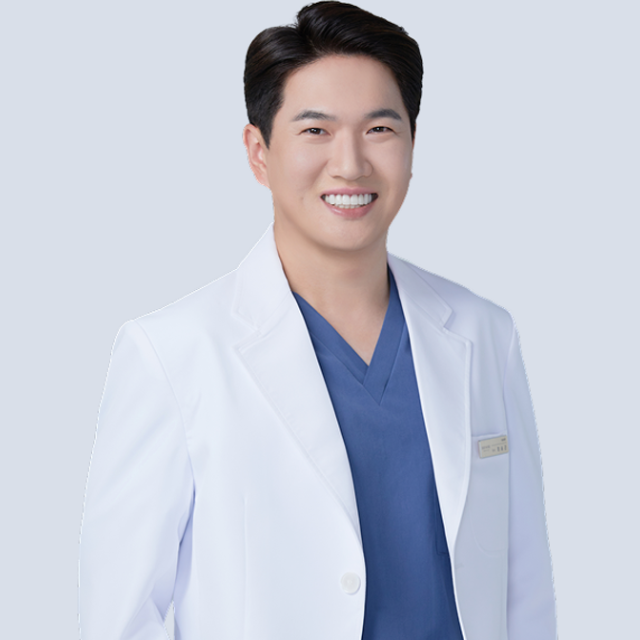

Both of DERMORE Clinic's physicians perform treatments in this category, and both hold a representative director role. This page does not claim that one specific doctor personally performs every session of this service; the treating physician is confirmed when the treatment is scheduled.
Dr. Song-Hee Han leads this area of the clinic's practice and is the named reviewer for this page. Dr. Song-Hee Han is a Representative Director of DERMORE Clinic and a board-certified dermatologist who holds a Doctor of Medicine degree and a PhD. Her stated areas of specialization are anti-aging treatments, lifting, volume enhancement, pigmentation and sensitive skin care. She was previously a director at Mifamoon Dermatology Clinic, Purin Dermatology Clinic and the Sinsa branch of The Hill Dermatology Clinic. She is a full member of the Korean Dermatological Association and the Korean Clinical Dermatology Treatment Research Association, and a member of the Korean Society for Laser Dermatology and the Korean Society of Dermatologic Anti-Aging Medicine.
Dr. Seung-Gon Jeong also performs treatments in this category. Dr. Seung-Gon Jeong is a Representative Director of DERMORE Clinic and a board-certified internal medicine specialist. His stated areas of practice are anti-aging treatments, lifting, volume enhancement, functional medicine, obesity management, body contouring and IV nutrient therapy. He was previously a director at Rienjang Clinic. He is a certified obesity specialist through the Korean Society for the Study of Obesity and a certified nutritional supplement prescription specialist through the Korean Society of Nutritional Supplement Prescription, and he is a member of the Korean Society of Functional Medicine, the Korean Society of Aesthetic Plastic and Laser Medicine, the Korean Filler Society and the Korean Society of Internal Medicine.
Every treatment at DERMORE Clinic begins with a one-on-one consultation with a physician, supported by the Metaview facial skin analysis system, and the treatment plan is then built around the patient's skin condition, medical history, expectations and schedule rather than a fixed menu.
Who Is a Good Candidate for an IPL Photofacial?
Adults with selected superficial pigmentation, sun spots or freckles.
Adults with certain forms of facial redness.
Adults with realistic expectations who understand that multiple sessions may be needed.
People willing to follow sun-protection and aftercare instructions.
Suitability depends on the exact diagnosis, your skin tone, recent sun exposure, your medical history and the device settings. People with an active infection in the treatment area should not be treated until it has resolved. Treatment may need postponing for sunburn, recent tanning, irritated skin or open wounds. Certain photosensitizing medications, some medical conditions, a history of abnormal pigmentation or scarring, and suspicious or undiagnosed lesions all require assessment.
The clinician reviews your skin concerns, medical history, medication and skincare use, previous procedures, recent sun exposure and any history of pigment change or scarring, then examines the skin to identify the type of pigmentation or redness and decide whether IPL is appropriate. The expected benefits, the alternatives, the risks, the session requirements and the aftercare are explained, and a test spot may be recommended.
What to Expect: Procedure, Recovery, and Results Timeline
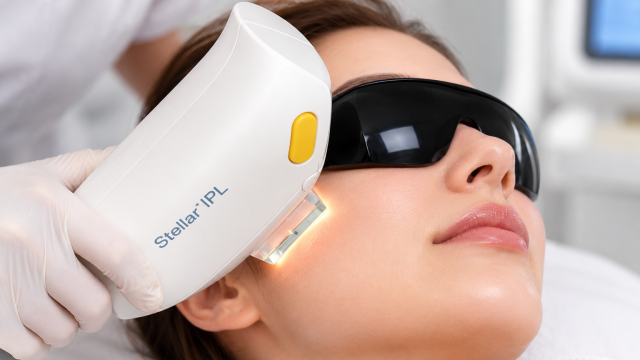
A session follows six steps.
Examine the skin and confirm the treatment plan.
Cleanse the treatment area and provide appropriate eye protection.
Select the suitable filter, lightguide and settings.
Apply the handpiece to the selected area and deliver controlled pulses of light.
Use contact cooling as appropriate for comfort and skin protection.
Examine the skin and give aftercare instructions.
A facial session may take approximately 15 to 30 minutes for a relatively straightforward area, with extra time for consultation, cleansing and aftercare. Anesthesia is usually not required; brief warmth, mild stinging or a snapping sensation is normal, and contact cooling improves comfort. Some patients need several sessions spaced weeks apart.
Stage | What happens |
|---|---|
Immediately after | Mild redness, warmth or swelling may occur |
Days 1–3 | Mild irritation often settles, though some effects last longer |
Days 3–7 | Selected pigmented spots may darken or develop a light crust before gradually fading — this does not happen to everyone |
1–2 weeks | Initial improvement may become noticeable |
2–4 weeks | More visible improvement in tone may develop |
4–6 weeks | Results are typically assessed to decide whether more sessions are needed |
The darkening at days three to seven surprises patients who have not been warned about it. It is an expected part of how treated pigment clears, not a sign that something has gone wrong — but it does mean that an IPL session a few days before a wedding is poor planning.
For an uncomplicated session, one to two days in Korea is a preliminary planning estimate, with flying home possible the same day or within one to two days if you feel well and the clinician agrees. Allow extra time if significant redness, swelling or other symptoms develop.
Before treatment, disclose medications, supplements, allergies, skin conditions, previous cosmetic treatments, any history of cold sores or scarring, and any tendency to develop dark marks after irritation. Avoid tanning and protect the skin from sunlight beforehand, and ask whether retinoids or exfoliating products should be paused and when they can be restarted.
Afterwards, cleanse gently and moisturize as appropriate. Do not pick, scrub or remove crusts, and avoid irritating skincare while the skin is sensitive. Use broad-spectrum sunscreen of at least SPF 30 daily, reapply as directed, minimize direct sun exposure and avoid tanning.
Safety, Precision, and Clinic Standards
Temporary redness, warmth, swelling, tenderness and changes in the appearance of pigmented spots may occur. Potential complications include burns, blisters, crusting, infection, scarring, hyperpigmentation and hypopigmentation.
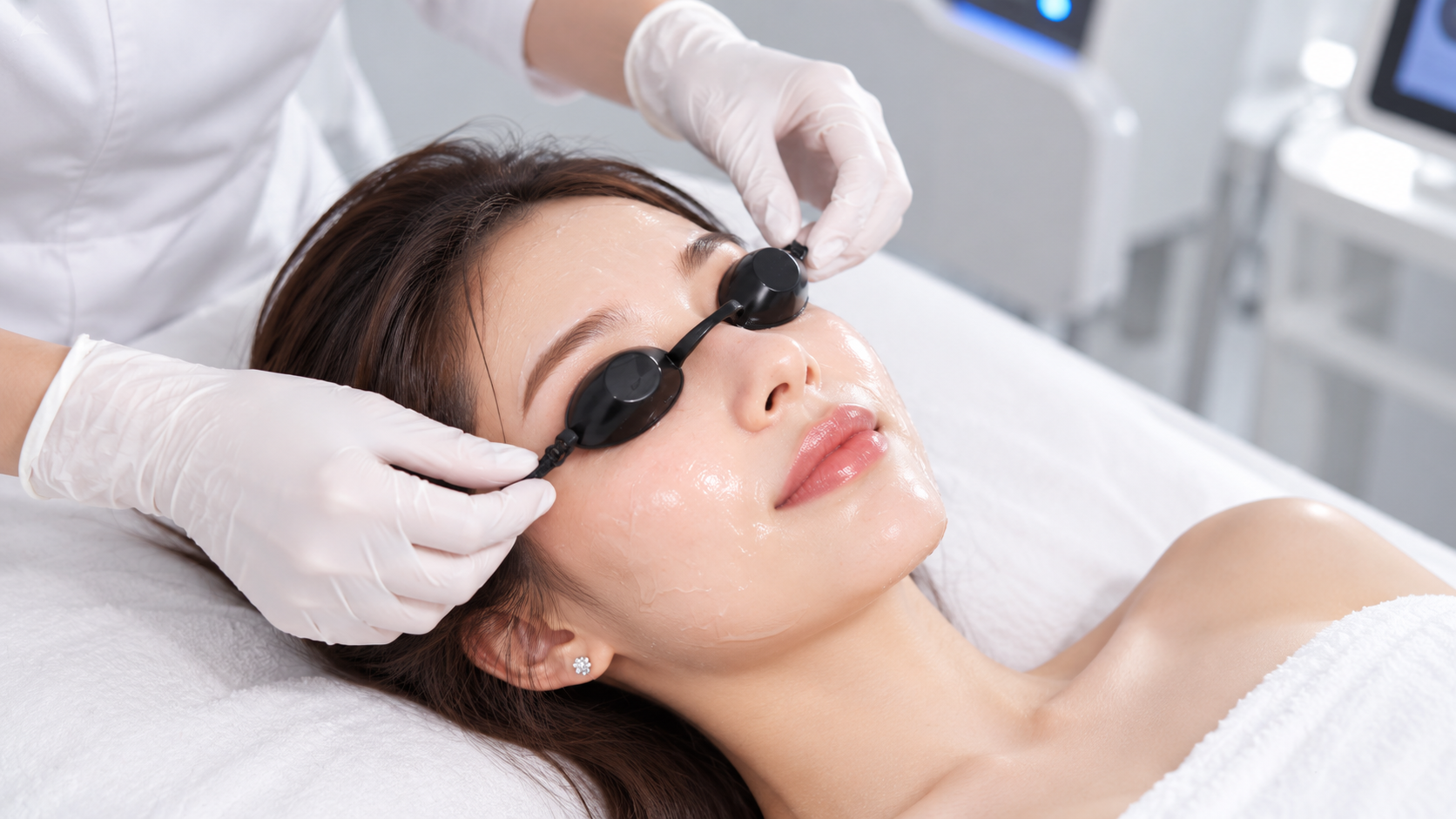
One risk is categorical rather than probabilistic: improper eye protection can cause serious eye injury, particularly when treating near the eyes. Eye protection during a light-based treatment is not a comfort measure, and a clinic that treats it casually is telling you something about the rest of its protocol.
What DERMORE Clinic states about its own standards is this. Consultations and treatments are led by a board-certified dermatologist and a board-certified internal medicine specialist. Treatment planning is personalized through one-on-one consultation to assess individual needs and suitability. The clinic also provides dedicated pre-treatment and post-treatment care, including intensive care programs, and its stated philosophy is "Value Beyond Skin" — care that goes beyond external appearance to support inner confidence and overall health.
DERMORE Clinic is a Registered Medical Institution for Attracting Foreign Patients, registered with the Republic of Korea's Ministry of Health and Welfare under the Medical Overseas Expansion and Foreign Patients Attraction Act. That registration covers the treatment of international patients; it is not a facility accreditation.
Combining an IPL Photofacial with Other Treatments
IPL may be combined or sequenced with selected skincare, topical treatments or other procedures when clinically appropriate. The same platform also supports fractional resurfacing, and some plans use more than one modality. Combining treatments can increase irritation and lengthen recovery, so suitability and timing are decided by the clinician.
Acne, Scar & Pore Care, where texture and scarring need a resurfacing approach.
Skin Boosters, where hydration and skin quality are the separate goal.
Medical Spa & Aesthetic Facials, where maintenance care supports the result.
The Bottom Line
IPL uses broad-spectrum light shaped by filters, which is what distinguishes it from a laser.
It may improve selected sun spots, freckles, uneven pigmentation and certain redness — not all pigmentation, and not permanently.
Treated spots often darken or crust at days three to seven before fading, which is expected.
A session takes approximately 15 to 30 minutes, usually without anesthesia, often across several sessions.
Eye protection is mandatory, and improper protection can cause serious eye injury.
Frequently Asked Questions
Am I a good candidate for an IPL photofacial? Adults with selected superficial pigmentation, sun spots, freckles or certain facial redness, assessed by a qualified clinician, with realistic expectations and a willingness to follow sun-protection and aftercare instructions.
Who should avoid or postpone treatment? Anyone with an active infection in the area until it has resolved, and anyone with sunburn, recent tanning, irritated skin or open wounds. Photosensitizing medications, certain medical conditions, a history of abnormal pigmentation or scarring, and undiagnosed lesions require assessment.
How long does a session take, and how many will I need? Approximately 15 to 30 minutes for a straightforward facial area. Some patients need several sessions spaced weeks apart, depending on the diagnosis and the response.
Is it painful? Is anesthesia used? Anesthesia is usually not required. Most patients feel brief warmth, mild stinging or a snapping sensation, and contact cooling improves comfort.
Why did my spots get darker afterwards? Selected pigmented spots may darken or develop a light crust between days three and seven before gradually fading. It is an expected part of the process for some patients, not a complication.
How many days should I stay in Korea? One to two days is a preliminary estimate for an uncomplicated session, with flying possible the same day or within one to two days if you feel well and the clinician agrees.
When will I see results? Initial improvement may be noticeable within one to two weeks, with more visible change over two to four weeks, and results typically assessed around four to six weeks.
What side effects are common? Temporary redness, warmth, mild swelling, sensitivity and irritation, with treated spots darkening before they fade and occasional temporary dryness or mild crusting.
Book a Consultation at DERMORE Clinic
If you are considering an IPL photofacial in Gangnam, Seoul, the consultation decides which filter and which settings suit your skin — and whether light is the right tool for the pigmentation you have.
DERMORE Clinic is at 3F, Yeonseung Building, 228 Dosan-daero, Gangnam-gu, Seoul 06048, Republic of Korea. Consultation hours are Monday to Friday from 10:00 to 19:00 KST and Saturday from 10:00 to 16:30 KST, with a weekday lunch break from 13:00 to 14:00 KST. The Wednesday schedule varies by holiday week, and the clinic is closed on Sundays and public holidays.
To book a consultation, contact DERMORE Clinic through its contact page, by phone on +82-2-541-3888, or by email at info@dermoreseoul.com. Consultations for international patients are available in English.
Disclaimer
For general information only. This page does not replace professional medical advice, diagnosis or treatment. Whether any treatment described here is appropriate for you, what it can realistically achieve and what risks it carries are determined in an individual consultation with a qualified medical professional at DERMORE Clinic. Individual results vary with skin condition, medical history, the technology selected and the course of recovery.
Sources & Further Reading
- Medicina — The Low-Fluence Q-Switched Nd:YAG Laser Treatment for Melasma: A Systematic Review, on the risks of light-based pigment treatment
Other Treatments
Explore additional dermatology and anti-aging treatments offered at DERMORE Clinic.

EMFACE Facial Muscle Lifting
EMFACE facial muscle lifting is a non-invasive treatment that combines synchronized radiofrequency energy with HIFES™ muscle stimulation, so that one session addresses both the skin and the facial muscles beneath it.
Learn More

ELSA Local Lipolysis
ELSA Local Lipolysis is a localized fat-reduction treatment intended to reduce stubborn fat deposits in selected body areas and improve body contours.
Learn More

Pre- & Post-Procedure Skin Care
Pre- and post-procedure skin care is personalized guidance and supportive skin care before and after cosmetic or dermatological treatments.
Learn More